Short answer
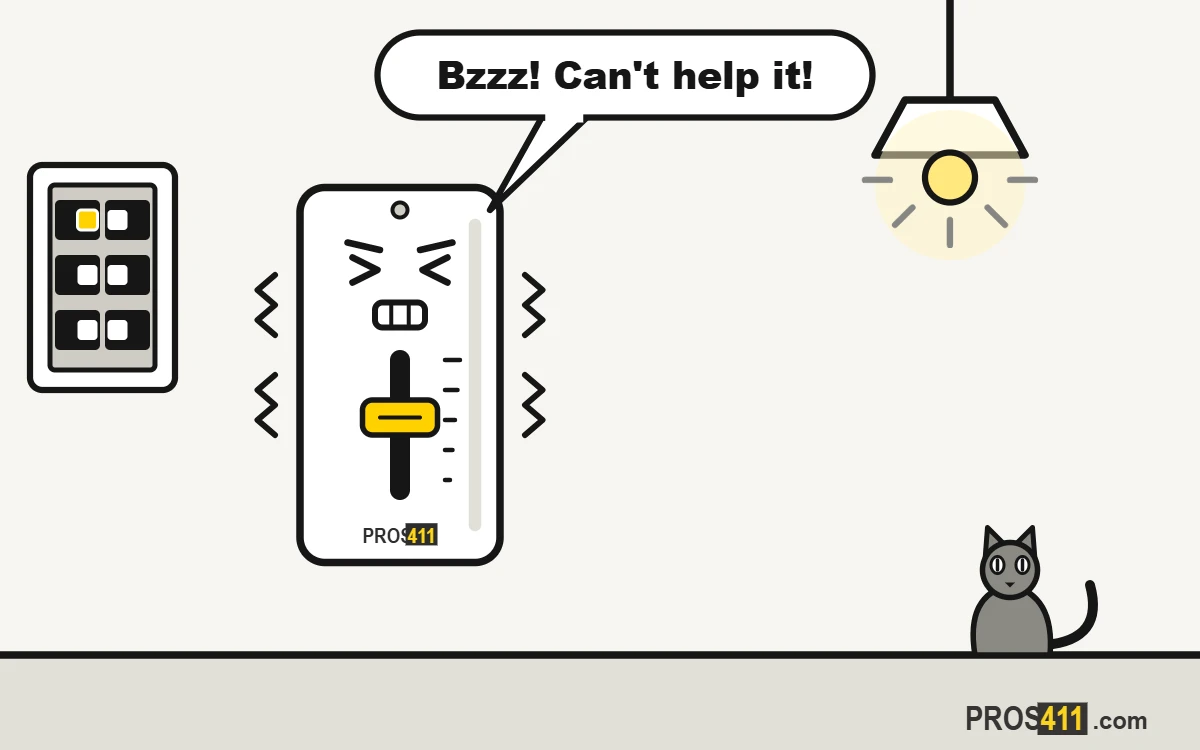
A dimmer that hums softly and feels slightly warm is common, mostly at low settings. Loud buzzing usually comes from bulbs that are not dimmable, or a dimmer made for old incandescent bulbs. Switch it off, let the bulbs cool and use dimmable LEDs. If the dimmer is hot, buzzes loudly or smells burnt, switch off its breaker and call an electrician to fit an LED-rated dimmer.
Safety first
A dimmer that is hot, not just warm, or that smells burnt, crackles or sparks is a fire risk. Switch off its breaker and do not use it. Do not open the cover.
Buzzing dimmer: what to check
1A soft hum can be normal
Many dimmers hum a little and feel slightly warm, mostly when the lights are set low. A loud buzz or real heat is not normal.
Read all the steps
- A soft hum can be normal. Many dimmers hum a little and feel slightly warm, mostly when the lights are set low. A loud buzz or real heat is not normal.
- Turn it off and let the bulbs cool. Slide the dimmer all the way down to off and wait a few minutes. Bulbs get hot, and you are about to change them.
- Use bulbs marked dimmable. Non-dimmable LEDs, or a mix of bulb types on one dimmer, buzz and flicker. Put the same dimmable LED in every socket.
- Turn it back on: quiet?. Slide it up. If the hum is gone or faint and the lights are steady, you are done.
- Hot, loud or smells? Breaker off, call. Switch off its breaker from a dry floor. Do not open the cover. An electrician can fit an LED-rated dimmer sized for your lights.
- Still not fixed? Call an electrician Especially if: the dimmer is hot, not just warm.
Electricians near you
Share your location and we will show the nearest ones with their phone number.
Or pick your city:
Why dimmers buzz
- Bulbs that are not dimmable, or a dimmer made for incandescent bulbs running LEDs.
- Too many lights on one dimmer: every dimmer has a maximum load, and going over it makes it run hot.
- Cheap bulbs, or a mix of brands and types on the same dimmer.
- A worn dimmer or a loose wire behind it, which can also make it hot.
Warm vs. hot
Dimmers turn a little power into heat, so a cover that feels slightly warm is normal, especially with many lights on. Hot is different. If you cannot keep your hand near it, it smells burnt or it crackles, switch off the breaker and call.
When to call an electrician
- The dimmer is hot, not just warm.
- It buzzes loudly even with dimmable bulbs.
- It smells burnt, crackles or sparks.
- The lights flicker or the dimmer shuts off on its own.
- You added more lights to it than before.
Frequently asked questions
Is it normal for a dimmer switch to buzz?
A soft hum is common, especially at low settings. A loud buzz usually means the bulbs are not dimmable or the dimmer does not match LED bulbs.
Is it normal for a dimmer switch to be warm?
Slightly warm, yes: dimmers turn a little power into heat. If it is hot, smells burnt or the cover looks discolored, switch off the breaker and call an electrician.
Why do my LED lights buzz on a dimmer?
Usually because the bulbs are not dimmable, or the dimmer was made for incandescent bulbs. Use dimmable LEDs. If it still buzzes, have an electrician fit an LED-rated dimmer.
Can a buzzing dimmer cause a fire?
A soft hum alone does not. A hot, loud or burnt-smelling dimmer can, because it may be overloaded or have a loose wire. Switch off the breaker and call.
How many lights can I put on one dimmer?
It depends on the dimmer: its maximum load is printed on the package or on the dimmer itself. The limit for LEDs is often lower than for incandescent bulbs. An electrician can check it for you.
Who replaces a dimmer switch?
An electrician. It means working on the wires behind the cover, and they can pick a dimmer rated for your bulbs and the number of lights.