Short answer
If someone cannot let go of an outlet or appliance, do not touch them. Switch off the breaker or the main, or pull the plug if it is safe. Call 911 for burns, chest pain, trouble breathing, confusion or a fall. Then, from a dry floor, leave that breaker off, unplug the appliance and do not use it. Call an electrician: a shock means current is leaking.
Safety first
Never touch a person who is still in contact with the power: cut the power first. If you were shocked and feel chest pain, numbness, a burn or confusion, call 911. If you are pregnant or have a heart condition, get checked even after a small shock.
What to do after a shock from an outlet or appliance
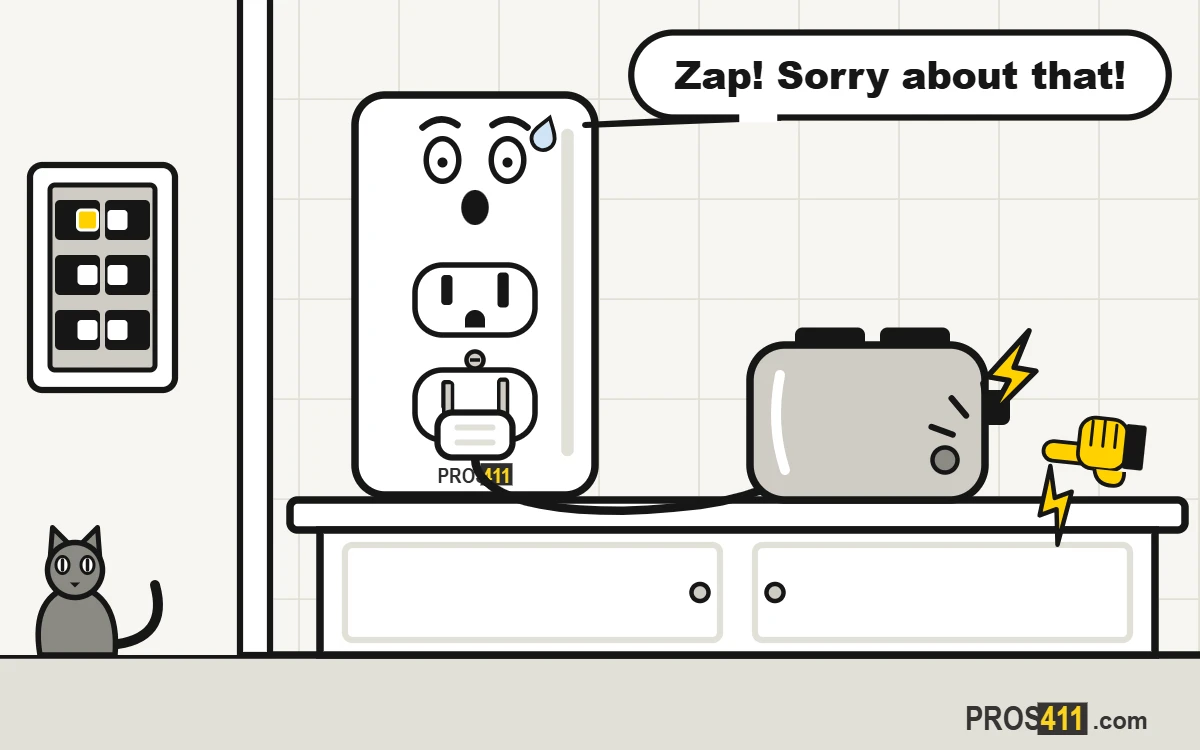
1Zap! Let go and step back
A tingle or jolt from an outlet, a switch or an appliance means current is going where it should not. If someone cannot let go, do not touch them.
Read all the steps
- Zap! Let go and step back. A tingle or jolt from an outlet, a switch or an appliance means current is going where it should not. If someone cannot let go, do not touch them.
- Hurt, burned or dizzy? Call 911. Call for a burn, chest pain, trouble breathing, confusion or a fall. Pregnant or have a heart condition? Get checked even after a small shock.
- Turn off that breaker from a dry floor. Switch off the breaker for that area, or the main if you are not sure which one. Do it before you touch the plug again.
- Then unplug the appliance. With the power off, pull the plug by its head. Set the appliance aside and do not use it until a repair shop checks it.
- Leave it off and call an electrician. A shock from an outlet, a switch or a metal case points to a wiring or ground problem. Do not open the cover.
- Everyone OK? Now call an electrician Especially if: anyone got a shock, even a small one.
Electricians near you
Share your location and we will show the nearest ones with their phone number.
Or pick your city:
If someone cannot let go
- 1
Do not touch them or the appliance.
- 2
Cut the power: switch off the breaker or the main, or pull the plug by its head if you can do it safely.
- 3
If you cannot cut the power, push the source away with something dry that does not conduct, like a wooden broom handle.
- 4
Call 911 right away and follow their instructions.
Static or electrical?
A tiny snap when you touch a doorknob on a dry winter day is static, and it is harmless. A tingle, a buzz or a jolt every time you touch an outlet, a switch or an appliance is electrical, and it is a warning. Stop using it and follow the steps above.
When to call an electrician
- Anyone got a shock, even a small one.
- Metal like a sink, a faucet or an appliance case gives you a tingle.
- The outlet or switch is warm, buzzes or smells burnt.
- A GFCI near the spot will not reset.
Frequently asked questions
What should I do after an electric shock from an outlet?
If you feel fine, stop using that outlet, switch off its breaker and call an electrician. Call 911 or get medical care for a burn, chest pain, trouble breathing, confusion or numbness.
Should I see a doctor after a small electric shock?
Yes, right away, if you have a burn, numbness, chest pain, an irregular heartbeat or confusion. If you are pregnant or have a heart condition, get checked even after a small shock. When in doubt, ask a doctor.
Why did my appliance shock me?
Usually a damaged cord, a fault inside the appliance or a missing ground. Switch off the breaker, unplug it and have it checked before you use it again.
Why does my outlet shock me?
A cracked cover, a loose or damaged outlet, or a wiring fault can let current reach you. Switch off its breaker and call an electrician.
Can a GFCI prevent shocks?
Yes, it helps. A GFCI cuts the power in a fraction of a second when it senses current leaking, which protects you near water. If you got a shock near a GFCI, have an electrician check that it works.
Is a tingle from a faucet or sink dangerous?
Yes, treat it as a warning: it can mean a wiring or grounding problem. Stop touching it and call an electrician right away. If it is strong or constant, switch off the main breaker from a dry floor.