Short answer
Mix warm water with a few drops of dish soap and test it on the inside of a door. Wipe the doors with a well-wrung soft cloth, following the wood grain, handles and edges included. For sticky spots, rub gently with a paste of baking soda and water on the soft side of a sponge. Wipe with plain water and dry right away so the wood does not swell.
How to clean greasy kitchen cabinets
1Sticky grease on the doors
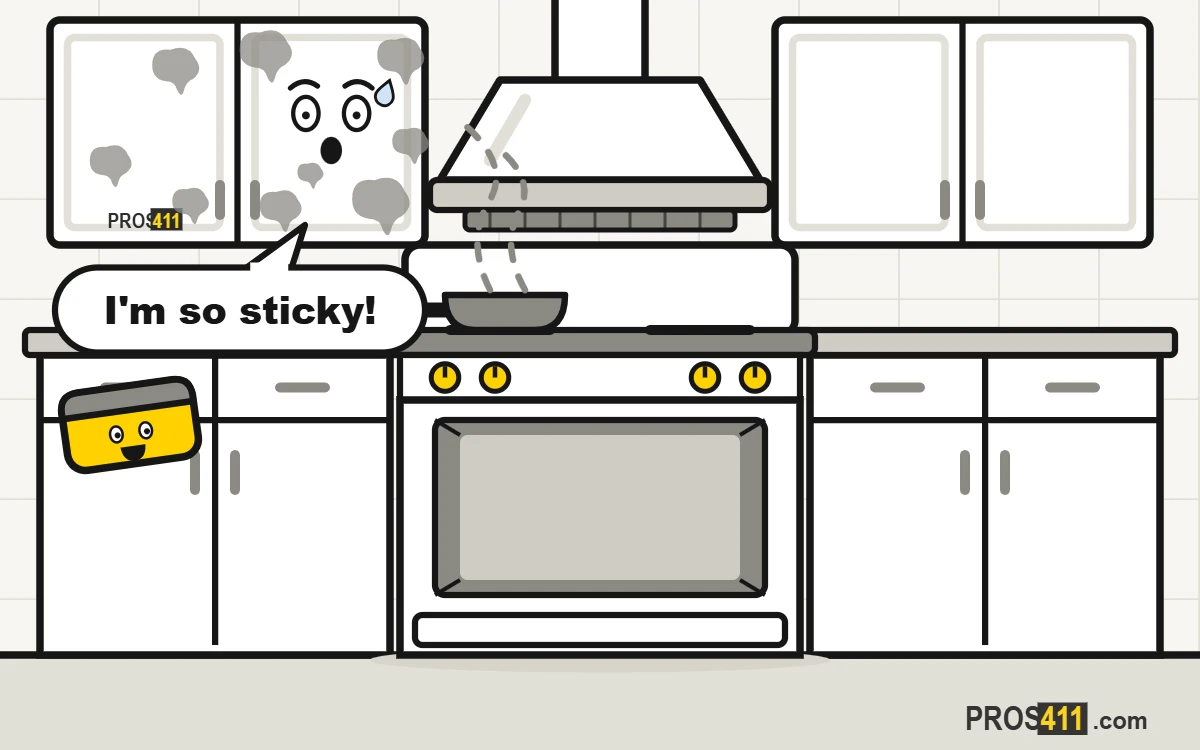
Cooking steam carries grease up and out, and it lands on the doors near the stove. Dust sticks to it, and hands add more on the handles.
Read all the steps
- Sticky grease on the doors. Cooking steam carries grease up and out, and it lands on the doors near the stove. Dust sticks to it, and hands add more on the handles.
- Warm water and a few drops of dish soap. Dish soap is made to cut kitchen grease. Test it first on the inside of a door to make sure the finish looks the same.
- Wipe with the grain. Wring the cloth well: damp, not dripping. Wipe along the wood grain and do not forget the handles and the edges.
- Sticky spots? Baking soda paste. Rub a paste of baking soda and water gently with the soft side of a sponge. No scouring pads: they dull the finish.
- Rinse and dry right away. Wipe with a cloth dampened in plain water, then dry with a towel. Water left on wood swells it and lifts paint.
- Still not fixed? Call a house cleaner Especially if: the grease is thick and old, and soapy water only spreads it around.
House cleaning near you
Share your location and we will show the nearest ones with their phone number.
Or pick your city:
What not to do
- Do not soak the doors or use a dripping sponge: water gets into the seams and swells the wood.
- Do not use steel wool, scouring powder or the rough side of a sponge on painted or glossy doors.
- Do not use bleach or ammonia on cabinets. They can damage the finish, and they must never be mixed.
Keep them clean longer
- Turn on the range hood every time you cook, and clean the range hood filter about once a month.
- Wipe the doors next to the stove once a week with a damp cloth.
- Wipe the handles more often: hands carry grease too.
If the finish looks dull afterward
Old grease can soften a finish, so once it is gone the door may look worn or patchy. A cabinet polish made for wood brings back some shine on wood finishes. Peeling or bubbled paint is a job for a cabinet refinisher.
When to call a house cleaner
- The grease is thick and old, and soapy water only spreads it around.
- You want the whole kitchen deep cleaned, inside and outside the cabinets.
- The finish is peeling, bubbled or soft (that needs a refinisher).
Frequently asked questions
What is the best way to clean greasy kitchen cabinets?
Warm water with a few drops of dish soap for most grease, and a baking soda paste for sticky spots. Both are gentle on most finishes; test on a hidden spot first.
Can I use vinegar on kitchen cabinets?
On painted or laminate doors, diluted with water, usually yes, but dish soap cuts grease better. Keep it off waxed or oiled wood, and never use it with bleach.
How do I clean sticky cabinets above the stove?
Start with warm soapy water, then a baking soda paste on the soft side of a sponge for the sticky film. Wipe with plain water and dry. Running the hood while you cook slows the buildup.
Will dish soap damage wood cabinets?
Not when it is diluted and you dry right away. The damage comes from water left on the wood, not from the soap.
How often should I clean kitchen cabinets?
Wipe the doors near the stove every week and wash all of them every few months. Handles need a wipe more often.