Short answer
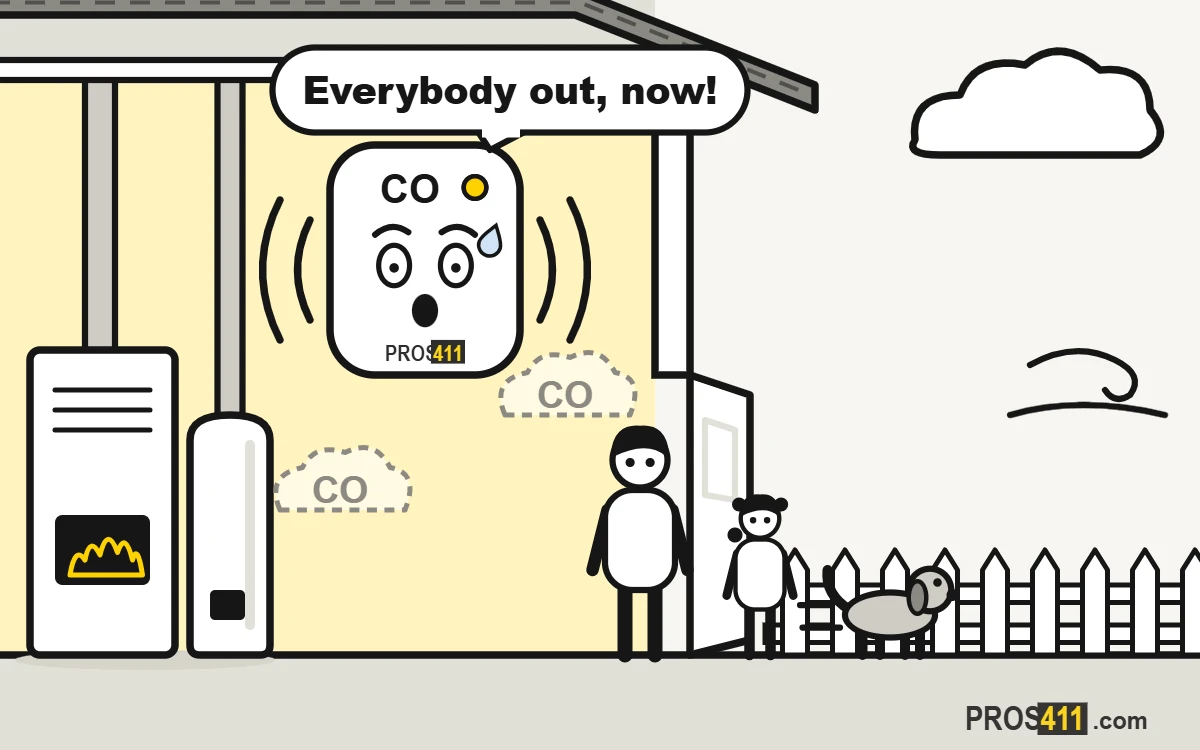
Treat a carbon monoxide alarm as real. Get everyone, including pets, outside to fresh air right away, then call 911 from outside. Do not go back in until responders say it is safe. Carbon monoxide has no color or smell, and headache, dizziness, nausea or confusion can be signs of poisoning. Once it is safe, have a heating technician check the furnace, water heater and other gas appliances before using them again.
Safety first
Do not stay inside to look for the source, open windows or "wait and see". Leave first and call from outside. If anyone has a headache, dizziness, nausea, confusion or is hard to wake, tell the 911 operator.
What to do when the carbon monoxide alarm goes off
1Four loud beeps and a pause: that is the alarm
On most CO alarms, the alarm is a loud pattern that repeats: four beeps, then a pause. Treat it as real, even if nobody feels sick.
Read all the steps
- Four loud beeps and a pause: that is the alarm. On most CO alarms, the alarm is a loud pattern that repeats: four beeps, then a pause. Treat it as real, even if nobody feels sick.
- Get everyone out to fresh air, pets too. Leave right away. Do not stop to open windows, look for the source or grab things. Count everyone once you are outside.
- Call 911 from outside. Say the CO alarm is going off and whether anyone has a headache, dizziness or nausea. If you smell gas, also call the gas company from outside.
- Stay out until responders say it is safe. Firefighters measure the air and look for the source. Do not go back in for anything, and tell them if someone is missing.
- Have a technician check your gas appliances. Before you use them again, an HVAC technician should inspect the furnace, water heater, flues and other gas appliances. Do not use the one they flag.
- One chirp a minute is the battery. A single short chirp about once a minute usually means a low battery or an alarm at the end of its life. If you are not sure, treat it as an alarm.
- Once it is safe, get your heating checked Especially if: the alarm goes off again, even once.
AC & heating near you
Share your location and we will show the nearest ones with their phone number.
Or pick your city:
Beeping vs. alarm
A full alarm is a loud, repeating pattern (on most units, four beeps and a pause). A single chirp about once a minute usually means a low battery, or that the alarm has reached the end of its life. Many CO alarms last 7 to 10 years, and the date is printed on the back. If a new battery does not stop the chirp, replace the alarm. When in doubt, treat it as an alarm and get out.
Common sources of carbon monoxide at home
- A furnace or boiler with a cracked heat exchanger or a blocked flue.
- A gas water heater that is not venting properly.
- Gas stoves or ovens used to heat the home.
- A car, generator or gas-powered tool running in an attached garage, even with the garage door open.
- A generator running near a window, door or vent.
- A fireplace or wood stove with a blocked chimney.
Before you use your appliances again
Even if the fire department clears the house, the source is still there until it is fixed. Have a heating (HVAC) technician inspect the furnace, the water heater, the flues and other fuel-burning appliances. Do not use the one they flag until it is repaired. Never run a generator indoors or in the garage.
When to call an HVAC technician
- The alarm goes off again, even once.
- The fire department cleared the house, but nobody has found and fixed the source yet.
- You smell exhaust or see soot around the furnace, water heater or fireplace.
- Before the heating season, for a yearly furnace inspection.
Frequently asked questions
My CO alarm went off but nobody feels sick. Do I still need to leave?
Yes. The safest choice is to get everyone outside and call 911 or the fire department from fresh air. Carbon monoxide has no smell, and symptoms can appear late.
Why does my carbon monoxide detector chirp once a minute?
Usually a low battery or an alarm that has reached the end of its life. Check the manual and the date on the back. A loud, repeating pattern is an alarm: get out and call.
Should I open the windows when the CO alarm goes off?
Not before you leave. Get everyone out first and call 911 from outside. The responders will measure the air and ventilate the house.
What are the symptoms of carbon monoxide poisoning?
Headache, dizziness, weakness, nausea, confusion and sleepiness, a lot like the flu. If several people or pets at home feel sick at the same time, get out and call 911.
Who do I call after the fire department leaves?
A heating (HVAC) technician to inspect the furnace, water heater, flues and other gas appliances. If you smell gas, call your gas company from outside.
Where should CO alarms go?
On every level of the home and outside sleeping areas, following the manufacturer's instructions.
Sources
Checked October 24, 2026. Requirements and recommendations change: confirm them on the source site.