Short answer
A thin layer of frost in cold, damp weather is normal: the heat pump melts it every so often in a defrost cycle. Give it an hour or two. Sweep snow away from the unit and keep two feet clear. Never chip the ice. If the unit is still a block of solid ice, set the thermostat to "Emergency heat" and call a technician.
Safety first
Do not chip, scrape or pry ice off the unit, and never open its panels. Do not climb a ladder to clear an icy gutter above it.
What to do when a heat pump is covered in ice
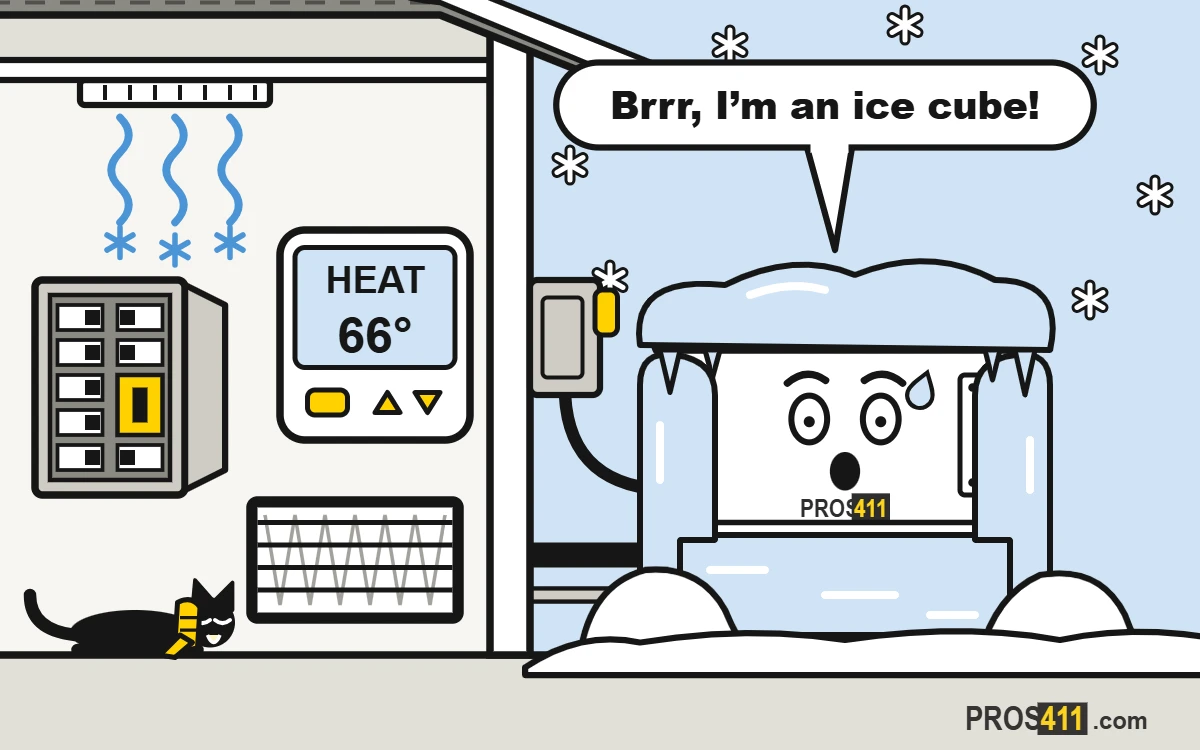
1Ice all over the outdoor unit
A little white frost is normal in cold, damp weather. Thick ice on the coil, the top or the fan is not, and the heat starts to fade.
Read all the steps
- Ice all over the outdoor unit. A little white frost is normal in cold, damp weather. Thick ice on the coil, the top or the fan is not, and the heat starts to fade.
- Give the defrost cycle time. Every 30 to 90 minutes, the unit stops to melt its frost and you may see steam. Watch it for an hour or two before you decide it is stuck.
- Sweep the snow away. With a broom, gently clear snow off the top and from around the sides. Keep two feet clear so air can flow and meltwater can drain.
- Never chip the ice. Hammers, scrapers and sticks bend the fins and can puncture the coil. Let the unit melt it, or leave it to a technician.
- Still solid ice? Emergency heat, then call. Set the thermostat to "Emergency heat" (EM Heat) so the backup heat warms the house and the outdoor unit rests. Then call a technician.
- Still not fixed? Call an HVAC contractor Especially if: the unit is still covered in solid ice after a couple of hours.
AC & heating near you
Share your location and we will show the nearest ones with their phone number.
Or pick your city:
Why a heat pump freezes up
Common causes are water dripping onto the unit from a gutter or the roof, snow drifts that bury it, and a unit that sits too low. Inside, a failed defrost sensor or control, a dirty filter or low refrigerant keep the ice from melting. Those need a technician.
What not to do
- Do not chip, scrape or pry the ice off.
- Do not pour hot water on the coil. The water refreezes on the unit and the ground around it.
- Do not cover the unit with a tarp or a box while it runs.
- Do not leave it on "Emergency heat" for days without calling. It is a backup and costs much more to run.
When to call an HVAC technician
- The unit is still covered in solid ice after a couple of hours.
- Ice keeps coming back on the coil or the top, even after you clear the snow and dripping water.
- The outdoor fan does not spin, or you hear grinding or the fan hitting ice.
- The house is getting cold, or you had to switch to emergency heat.
Frequently asked questions
Is it normal for a heat pump to have ice on it?
A thin layer of frost in cold, damp weather is normal, and the unit melts it in a defrost cycle. Thick ice that covers the coil or the top and stays for hours is not.
How do I defrost my heat pump?
Let it run its own defrost cycle, and clear snow and dripping water away from it. If it is still a block of ice after a couple of hours, switch the thermostat to emergency heat and call a technician.
Can I pour water on my frozen heat pump?
It is better not to. The water can refreeze on the unit and the ground around it. Let the defrost cycle work, and call a technician if the ice stays.
Should I turn off my heat pump if it is frozen?
If it is encased in ice, set the thermostat to "Emergency heat". The outdoor unit stops and the backup heat keeps the house warm while you wait for a technician.
Why does my heat pump keep freezing?
Common reasons are water dripping from a gutter, snow piled around it, a dirty filter, low refrigerant or a defrost part that failed. If it keeps freezing after you clear the snow and water, a technician needs to check it.