Short answer
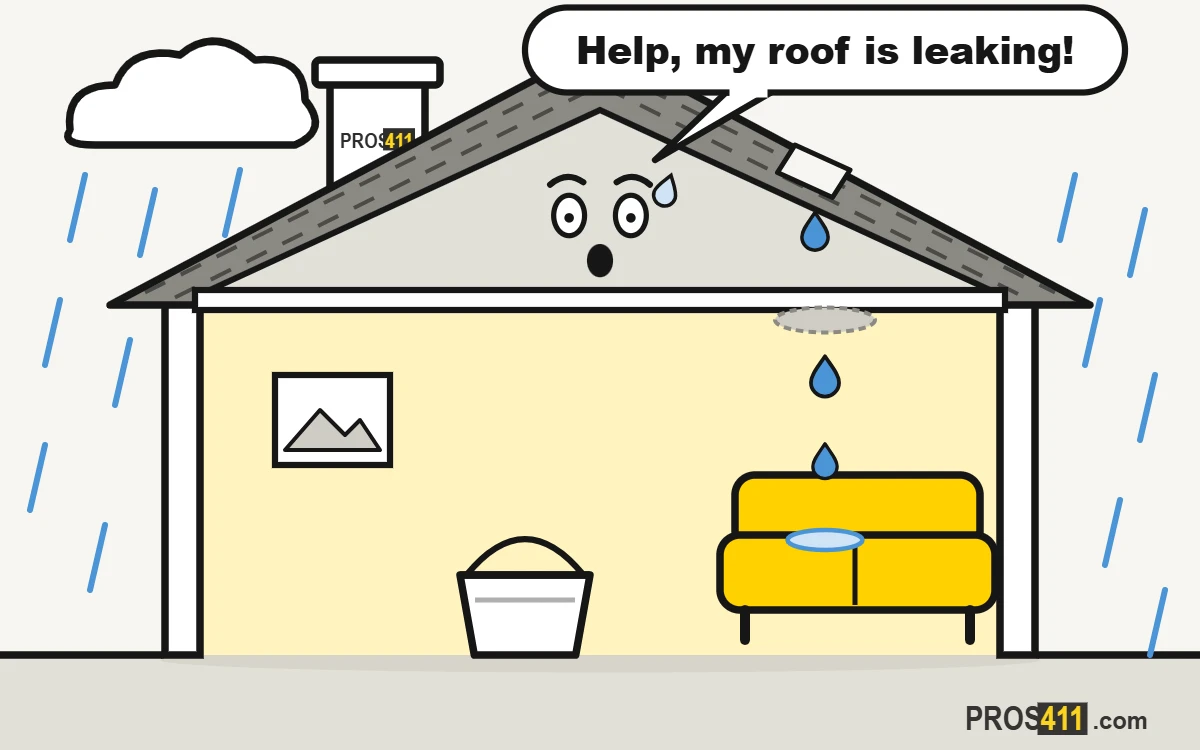
If your roof is leaking, handle it from inside. Put buckets under the drips, move furniture and electronics, and lay towels or plastic on the floor. Take photos and video of the ceiling and any damage for your insurance. Call a roofer for an emergency tarp. Do not go on the roof during or right after rain: wet roofs are slippery and falls are serious.
Safety first
Do not climb on a wet or storm-damaged roof. If water is dripping near a light fixture, a ceiling fan or outlets, turn off that circuit at the breaker panel. Do it only if you can reach the panel standing on a dry floor. If a ceiling is sagging with water, keep everyone out from under it.
What to do when the roof leaks
1Water is dripping from the ceiling
Rain gets in through a missing shingle or the metal seal around a chimney or vent. It runs along the wood until it drips. Act from inside.
Read all the steps
- Water is dripping from the ceiling. Rain gets in through a missing shingle or the metal seal around a chimney or vent. It runs along the wood until it drips. Act from inside.
- Bucket under the drip, things out of the way. A towel inside the bucket stops the splashing. Move furniture, rugs and electronics, or cover them with plastic.
- Ceiling bulging? Poke a small hole. Only a small bulge, with nearby lights off: a screwdriver hole in the center lets it drain into the bucket. If it sags a lot, stay out.
- Take photos for insurance. Photos and video of the stain, the drips and anything damaged, with the date. Keep receipts for buckets, tarp and drying.
- Stay off a wet roof: a roofer tarps it. Do not climb up during or after rain. A roofer can put on an emergency tarp today and fix it when it is dry.
- Still not fixed? Call a roofer Especially if: any active leak: ask for an emergency tarp.
Roofers near you
Share your location and we will show the nearest ones with their phone number.
Or pick your city:
Protect the inside
- 1
Put buckets or pots under each drip; a towel inside the bucket stops the splashing.
- 2
Move furniture, rugs, electronics and documents out of the way, or cover them with plastic.
- 3
If water is near a light fixture, a fan or outlets, turn off that circuit at the breaker panel (only from a dry floor).
- 4
If the ceiling has a small bulge of water, turn off nearby lights first. Standing to the side, poke a small hole in its center with a screwdriver so it drains into a bucket. If it sags a lot or cracks, keep everyone out of the room and call.
- 5
If you have safe attic access, look with a flashlight for wet wood or insulation and put a bucket under the drip there too. Step only on the wooden beams (joists), not between them.
Document it for insurance
- Photos and video of the ceiling stains, the drips and any damaged belongings, with the date.
- From the ground (not the roof): photos of missing shingles, fallen branches or damaged gutters.
- Keep receipts for the tarp, buckets, drying and any place you stay if the home is not livable.
- Call your insurance company before any permanent repair. But do not wait to protect the home: insurers expect you to stop further damage, and an emergency tarp does that.
After the storm
Leaks often start at the flashing (the metal strips around chimneys, vents and skylights) or at missing or lifted shingles. Clogged gutters can also push water under the roof edge. After hail or high winds, roofers in the area get busy fast. Ask for a written estimate and for their license or registration where your state requires one. Be careful with door-to-door offers that ask for a large payment upfront.
When to call a roofer
- Any active leak: ask for an emergency tarp.
- Water reaching light fixtures, outlets or the electrical panel.
- A sagging ceiling.
- Missing shingles, a fallen tree or branch on the roof, or hail damage.
Frequently asked questions
Can I put a tarp on my roof myself?
Better not. Roofers have the harness, ladder and practice to do it safely, and falls from roofs are among the most serious home accidents. Many roofers tarp the same day.
Will insurance pay for a roof leak?
It depends on the cause and your policy. Sudden damage from a storm or a fallen tree is often covered; wear and old age usually are not. Document everything and call your insurer.
Is a roof leak an emergency?
An active leak is urgent because water damage grows by the hour. Use the "24/7 emergencies" filter to find roofers who answer now.
How do I find where the roof is leaking?
Do not go by the stain: the hole is often not right above it, because water runs along the wood first. A roofer traces it from the attic and the roof once it is safe to go up.
Should I poke a hole in a bulging ceiling?
Only if the bulge is small: turn off nearby lights, stand to the side and make a small hole in the center so it drains into a bucket. If the ceiling sags a lot or cracks, stay out of the room and call.
How fast does a roof leak cause mold?
Fast: the EPA advises drying wet materials within 24 to 48 hours to prevent mold. Run fans and a dehumidifier, and pull up wet rugs and pads.
Sources
Checked October 24, 2026. Requirements and recommendations change: confirm them on the source site.