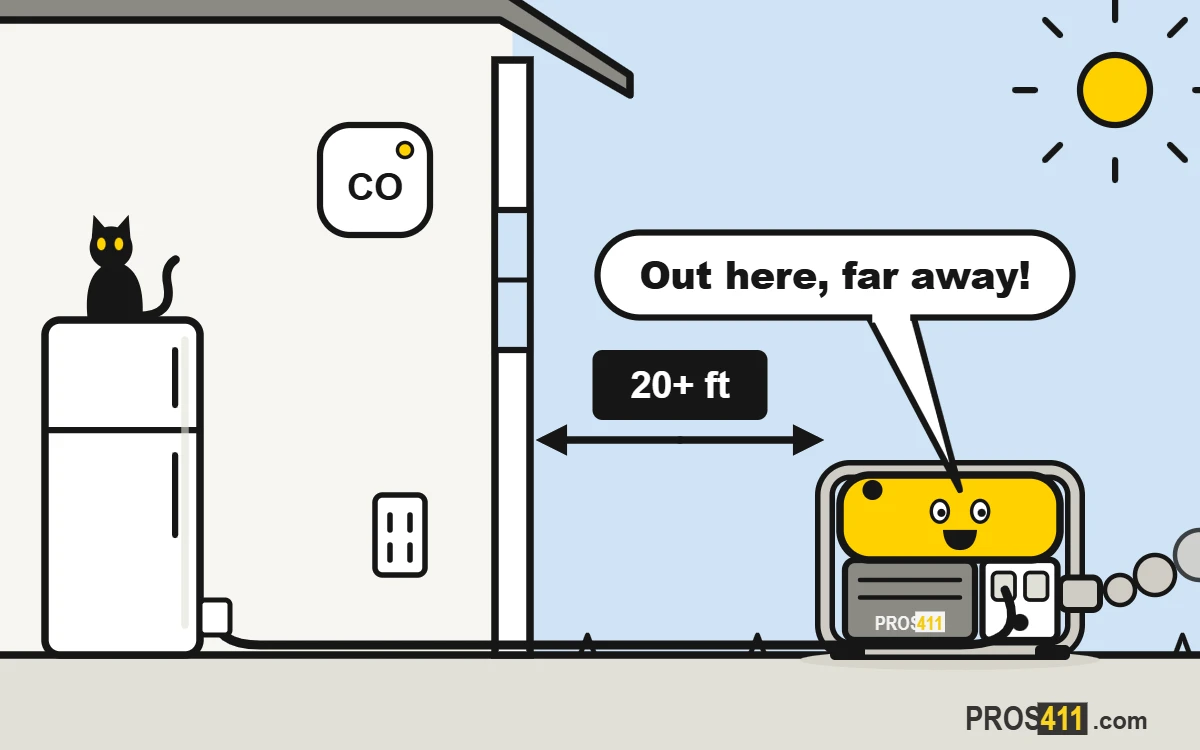
Short answer
Run a portable generator only outdoors, at least 20 feet from the house, with the exhaust pointing away from doors and windows. Never run it in the garage, even with the door open. Plug appliances into the generator with heavy-duty outdoor cords, never into a wall outlet. Keep battery CO alarms working inside. Turn it off and let it cool before refueling. To power house circuits, an electrician installs a transfer switch.
Safety first
A generator makes carbon monoxide, a gas you cannot see or smell. Never run it indoors, in a garage, a basement or a shed. If anyone feels dizzy, sick or weak, get outside into fresh air and call 911. Never plug a generator into a wall outlet: it can send power back into the lines and hurt you, your neighbors or line workers.
How to run a generator safely in a power outage
1Never inside, not even the garage
A generator can fill a room with carbon monoxide in minutes, even with doors or windows open. You cannot see it or smell it.
Read all the steps
- Never inside, not even the garage. A generator can fill a room with carbon monoxide in minutes, even with doors or windows open. You cannot see it or smell it.
- Outside, 20 feet away, exhaust out. Set it on dry, level ground at least 20 feet from the house. Point the exhaust away from doors, windows and vents.
- Cords to appliances, never the wall. Run heavy-duty outdoor extension cords from the generator to each appliance. Plugging it into a wall outlet sends power back into the lines.
- Test the CO alarms inside. Battery or battery-backup CO alarms keep working in an outage. Test them. If one goes off or anyone feels dizzy, get outside and call 911.
- Turn it off and let it cool to refuel. Gas spilled on a hot engine can catch fire. Shut it off, wait until it cools, and keep the fuel away from the generator and the house.
- Want it wired to the house? Call an electrician Especially if: you want the generator to power house circuits: an electrician installs a transfer switch or an interlock.
Electricians near you
Share your location and we will show the nearest ones with their phone number.
Or pick your city:
What not to do
- Do not run it in a garage, a basement, a shed or a covered porch, even with the door open.
- Do not put it near a window, a door, a vent or a neighbor's window.
- Do not plug it into a wall outlet or use a cord with a plug on both ends. That is called backfeeding.
- Do not run it in the rain without a cover made for it, and never touch it with wet hands.
- Do not refuel it while it is running or hot.
To power the house circuits
To run the furnace, a well pump or whole circuits, the generator has to connect to the panel through a transfer switch or an interlock. An electrician installs it and pulls the permit. It keeps power from flowing back into the utility lines.
Signs of carbon monoxide
Headache, dizziness, weakness, an upset stomach, confusion or feeling like you have the flu. If a CO alarm goes off or anyone feels this way, get everyone outside into fresh air and call 911.
When to call an electrician
- You want the generator to power house circuits: an electrician installs a transfer switch or an interlock.
- Your CO alarm goes off (get outside and call 911 first).
- The generator sparks, smells burnt or gives you a shock.
- You want a standby generator installed.
Frequently asked questions
How far should a generator be from the house?
At least 20 feet, according to the CPSC, with the exhaust pointing away from doors, windows and vents. Farther is better.
Can I run a generator in my garage with the door open?
No. Carbon monoxide builds up fast in a garage, even with the door open, and gets into the house. Run it outside only.
Can I plug a generator into a wall outlet?
No. That is called backfeeding. It sends power into the house wiring and back out to the utility lines, where it can hurt you or line workers and start a fire.
Can I run a generator in the rain?
Only under an open, dry cover made for generators, on dry ground. Keep your hands dry, and never move it into the garage to keep it dry.
What can I run on a portable generator?
Whatever fits its rated watts: often the fridge, a few lights, phone chargers and a fan. Add up the watts on each appliance label and stay under the generator's running watts.
Do I need an electrician to hook up a generator?
To power house circuits, yes. An electrician installs a transfer switch or an interlock so the generator cannot backfeed the utility lines. Cords straight to appliances do not need one.
Sources
Checked October 24, 2026. Requirements and recommendations change: confirm them on the source site.