Short answer
Pull on the grass at the edge of the patch. If it lifts like a carpet, look for grubs. If it holds, push a screwdriver into the soil: if it barely goes in, the soil is too dry. Watch the area while the sprinklers run, because a tilted or blocked head often misses it. Fix the head, then water deeply in the early morning two or three times a week.
How to find out why your lawn has brown patches
1A brown patch shows up
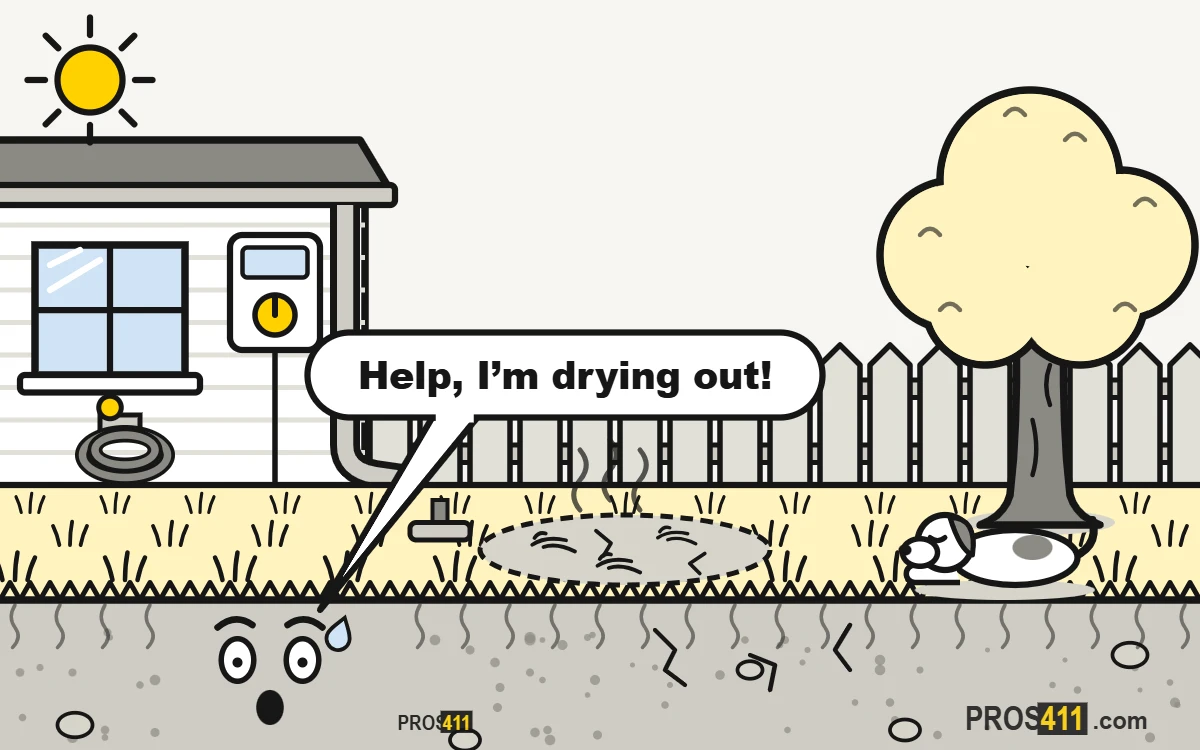
The grass in one area goes flat, dry and crunchy while the rest looks fine. Heat makes it spread fast, so check it the same day.
Read all the steps
- A brown patch shows up. The grass in one area goes flat, dry and crunchy while the rest looks fine. Heat makes it spread fast, so check it the same day.
- Tug test: do the roots hold?. Pull a handful of grass at the edge. If it lifts like a carpet with no roots, you likely have grubs. If it holds, keep testing.
- Screwdriver test: is the soil dry?. Push a long screwdriver into the soil. In moist soil it slides in about 6 inches. If you can barely push it in, the patch is not getting enough water.
- Make sure the spray reaches it. Run that zone and watch. A tilted, sunken or clogged head, or a plant in the way, often leaves a dry patch. Straighten or clean it.
- Water deeply, early in the morning. Two or three long waterings a week beat a little every day. With enough water, a dry patch usually comes back in one to three weeks.
- Still not fixed? Call a landscaper Especially if: the patches keep growing after two weeks of deep watering.
Landscaping near you
Share your location and we will show the nearest ones with their phone number.
Or pick your city:
Other common causes
- Dog spots: round patches, often with a darker, thicker ring. Rinse the spot with water soon after your dog goes.
- Fungus: rings or patches that spread in hot, humid weather, common in Florida and Texas. Water only in the morning and ask a pro about treatment.
- Chinch bugs: yellowish, then brown patches in sunny spots of St. Augustine grass, often next to a driveway or sidewalk.
- Dull mower blades or cutting too short: the tips look torn and the lawn turns tan after mowing.
- A spill: gasoline, fertilizer or pool water burns the grass in a sharp-edged shape.
What not to do
- Do not fertilize a brown patch in the summer heat. It stresses the grass more.
- Do not water a little every evening. Shallow water keeps roots short, and grass that stays wet at night invites fungus.
- Do not dig out the patch and lay new sod until you know the cause, or the new grass dies too.
When to call a landscaper
- The patches keep growing after two weeks of deep watering.
- You found grubs or chinch bugs over a large area.
- You see rings or spots that look like fungus and spread fast.
- Your sprinklers miss areas that you cannot fix by adjusting the heads.
Frequently asked questions
Why does my lawn have brown patches?
Most often the patch is not getting enough water, from a sprinkler that misses it or soil that dries out first. Grubs, chinch bugs, fungus and dog urine are the other usual causes.
Will brown grass come back?
Often yes, if the roots are alive. Grass that went dormant from heat or drought usually recovers in one to three weeks with deep watering. If it pulls up with no roots, it needs reseeding or new sod.
How can I tell if my lawn is dead or dormant?
Pull a few blades. Dormant grass holds firm, and the base of the stems is still moist. Dead grass pulls out easily, and the base is dry and brittle.
Do dogs cause brown spots in the lawn?
Yes. Dog urine leaves round brown spots, often with a darker ring around them. Rinse the spot with plenty of water soon after, and the grass usually recovers.
How long does it take a brown patch to recover?
With deep watering, dry patches usually start to recover in one to three weeks. Patches from grubs or fungus take longer and may need reseeding.