Short answer
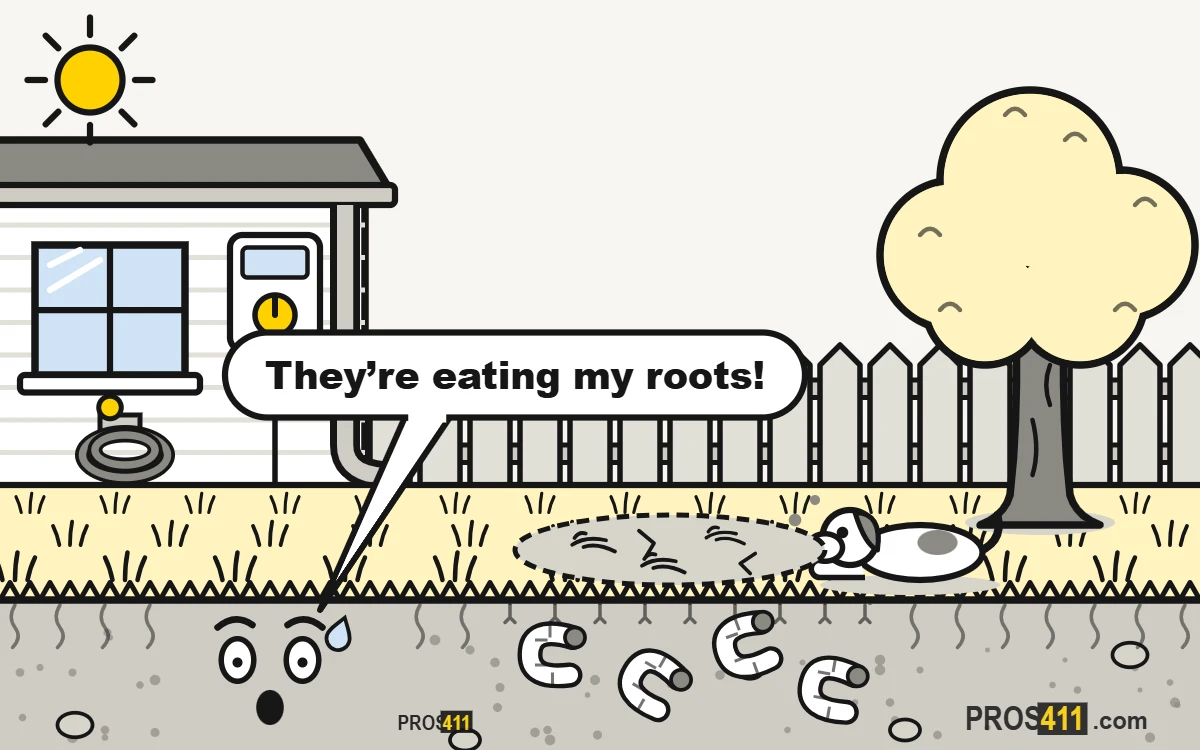
Grubs are white, C-shaped beetle larvae that eat grass roots. Signs: brown patches that feel spongy, turf that lifts like a carpet, and birds, skunks or your dog digging. Cut a square foot of sod on three sides, fold it back and count. About five or more per square foot is worth treating. Use a grub product labeled for lawns, water it in, then reseed the bare areas.
Safety first
Grub products are pesticides. Follow the label exactly, wear gloves, water the product in, and keep kids and pets off the lawn until it dries.
How to check for grubs and treat them
1Brown, spongy patches and digging
Grubs chew the roots, so patches brown out and feel soft underfoot. Birds, skunks and dogs dig there looking for a snack.
Read all the steps
- Brown, spongy patches and digging. Grubs chew the roots, so patches brown out and feel soft underfoot. Birds, skunks and dogs dig there looking for a snack.
- Does the grass lift like a carpet?. Grab the brown grass and pull. With grubs it peels back easily, because the roots are gone. You will often see them right under it.
- Count them in one square foot. Cut a square foot of sod on three sides and fold it back. Count the white grubs in the top 2 to 3 inches. About five or more means treat.
- Treat, then water it in. Use a grub product labeled for lawns, at the time of year the label says. Water right after so it reaches the soil where grubs feed.
- Reseed and let the roots grow back. Rake out the dead grass, reseed or patch the bare spots and keep them moist. New roots fill in once the grubs are gone.
- Still not fixed? Call a landscaper Especially if: grub damage covers a large part of the lawn.
Landscaping near you
Share your location and we will show the nearest ones with their phone number.
Or pick your city:
Timing matters
Grubs are small and close to the surface in late summer and early fall, when most products work best. Big grubs in spring are hard to kill and are about to turn into beetles anyway. Preventive products go down in early summer, before the eggs hatch. Beneficial nematodes are a non-chemical option that works when the soil stays moist.
What not to do
- Do not treat without counting first. A few grubs are normal, and a healthy lawn handles them.
- Do not skip watering the product in. Left on the blades, it does not reach the grubs.
- Do not reseed right after every product: check the label for how long to wait.
When to call a landscaper
- Grub damage covers a large part of the lawn.
- You treated and the patches keep spreading a month later.
- Animals tear up the lawn every night.
- You would rather not handle pesticides around kids, pets or a vegetable garden.
Frequently asked questions
How do I know if I have grubs in my lawn?
Pull on a brown patch. If the grass lifts like a carpet with no roots and you see white C-shaped larvae underneath, you have grubs. Animals digging at night is another sign.
How many grubs per square foot is too many?
About five or more per square foot is the usual point to treat. A thick, well-watered lawn can handle a few more without showing damage.
When is the best time to treat grubs?
Late summer to early fall, when the grubs are young and near the surface. Preventive products go down in early summer, before the eggs hatch.
Will grass grow back after grubs?
Grass that still has some roots recovers with water once the grubs are gone. Patches that lifted like a carpet usually need reseeding or new sod.
Do grubs come back every year?
They can, because beetles lay new eggs every summer. Keeping the lawn healthy and checking in late summer catches a new batch before it does damage.