Short answer
Run the drip zone and check the base of each plant. Rinse the filter screen at the start of the line. Open the end cap at the far end and let water run until it comes out clear. Soak crusty emitters in white vinegar, or pull them out and push in new ones with the same flow. Plug the old holes with goof plugs.
How to clean a clogged drip irrigation system
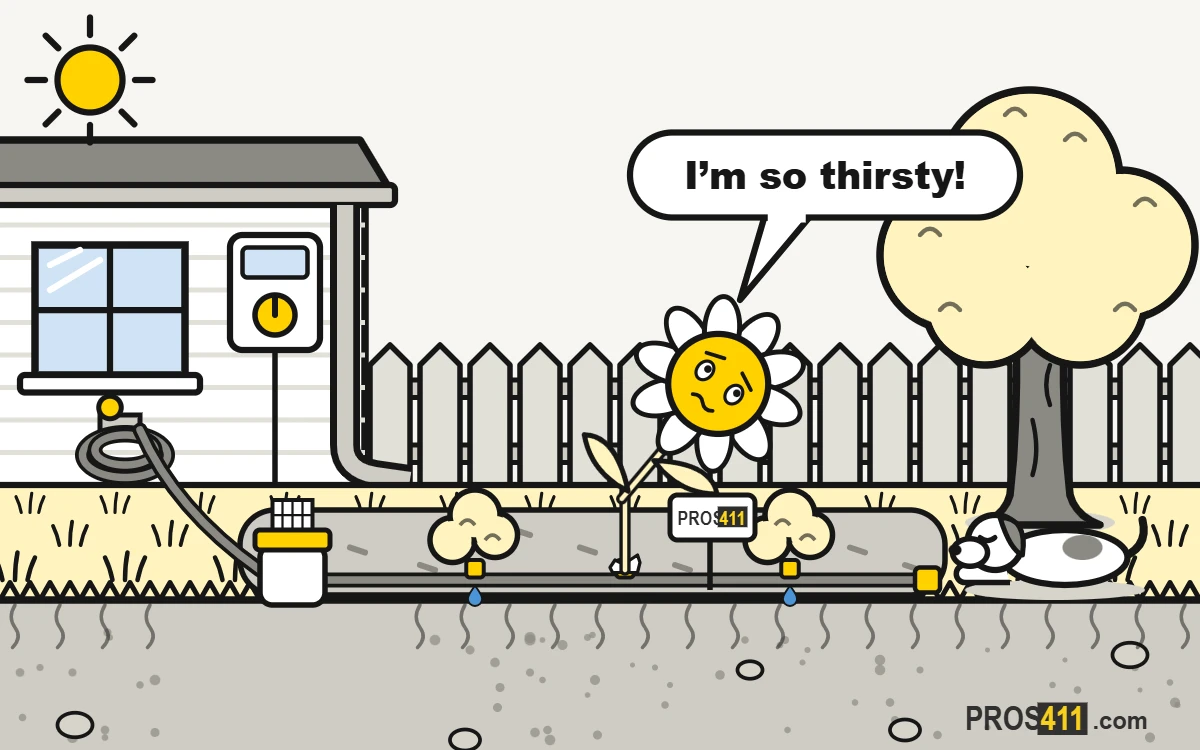
1One plant wilts while the others drip
Its emitter is clogged, so it gets no water even when the zone runs. In hot weather a plant can wilt in a day or two.
Read all the steps
- One plant wilts while the others drip. Its emitter is clogged, so it gets no water even when the zone runs. In hot weather a plant can wilt in a day or two.
- Find the clogged emitter. Run the zone and look at the base of each plant. A dry ring or a white crust on the emitter means minerals or dirt are blocking it.
- Rinse the filter screen. With the water off, unscrew the filter cap near the valve, pull out the screen and rinse it under a hose. Put it back hand tight.
- Flush the end of the line. Open the end cap or flush valve at the far end and run the water until it comes out clear. Then close it again.
- Replace or clean the emitter. Soak crusty emitters in white vinegar, or pull them and push in new ones with the same flow in gallons per hour. Plug old holes with goof plugs.
- Still not fixed? Call a landscaper Especially if: many emitters clog again within weeks (you may need a better filter).
Landscaping near you
Share your location and we will show the nearest ones with their phone number.
Or pick your city:
Why drip lines clog
- Hard water: minerals build up as a white crust. Very common in Arizona, New Mexico and Texas.
- Dirt that gets in during repairs, or a dirty filter that lets sand through.
- Algae in tubing that sits in the sun.
- Roots or insects that crawl into emitters on lines that stay dry for weeks.
Keep it working
Rinse the filter and flush the lines at least twice a year, and after any repair. Once a month, walk the zone while it runs and look for dry plants, puddles or geysers. Cover the tubing with mulch to keep it cooler and out of the sun.
When to call a landscaper
- Many emitters clog again within weeks (you may need a better filter).
- Fittings keep popping off because the pressure is too high.
- The drip zone does not turn on at all.
- You want to switch part of the lawn or your beds to drip.
Frequently asked questions
How do I unclog drip irrigation emitters?
Soak them in white vinegar for about an hour to dissolve the mineral crust, then rinse them. If they still do not drip, replace them with new emitters of the same flow.
How often should I flush my drip system?
At least twice a year, and any time you repair a line. Open the end caps and run the water until it comes out clear.
Why is my drip irrigation not working?
Usually a clogged filter or emitters, a kinked or cut line, or a zone that does not turn on. Check the filter and the end of the line first.
Can I poke a clogged drip emitter with a pin?
Better not. Poking can damage the small channel inside and change the flow. Clean it with vinegar or replace it.
Do drip systems need a filter?
Yes. A filter at the start of the line keeps sand and debris out of the emitters. Most clogs start with a dirty or missing filter.