Short answer
Cover them with a wide ring of wood mulch, 2 to 3 inches deep, kept a few inches away from the trunk. That protects the roots and ends the mower bumps. Do not cut large roots: they hold the tree up and bring it water. Do not pile a thick layer of soil on top, which smothers them. If roots lift a sidewalk, the driveway or the foundation, call a certified arborist.
What to do about tree roots showing in the lawn
1Roots pop up through the grass
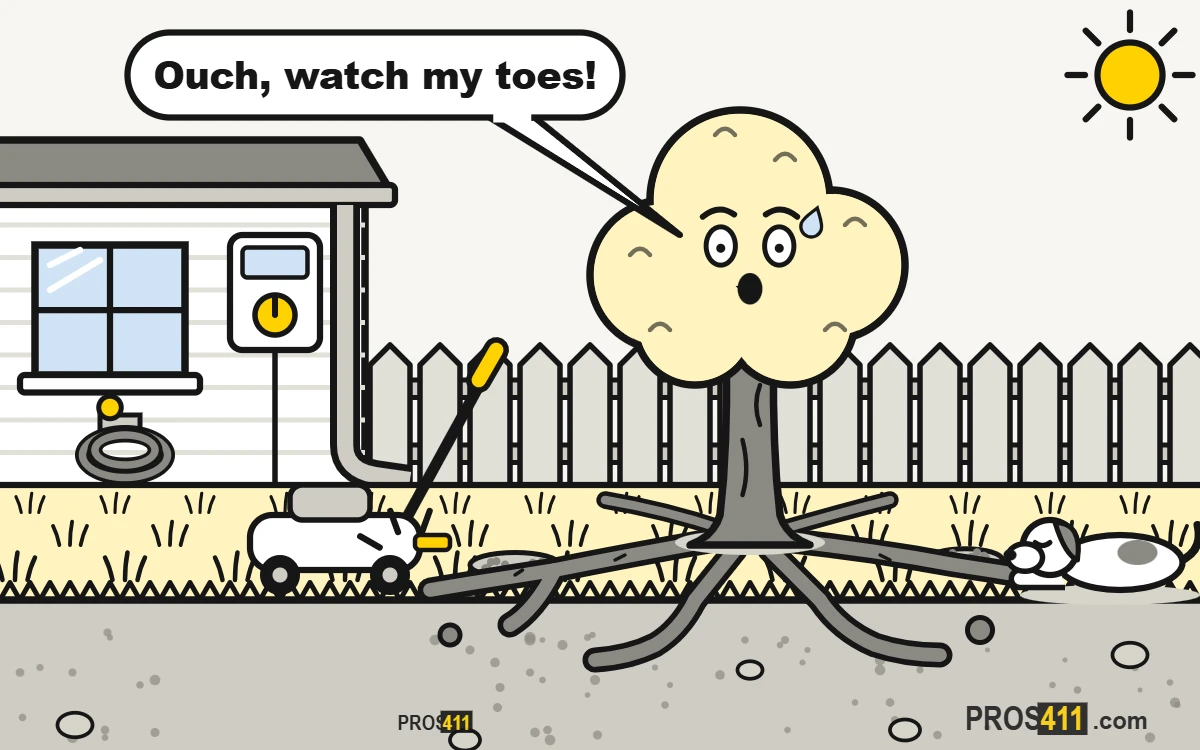
Some trees grow roots near the surface, and rain and foot traffic wear the soil off them. The mower bumps them and scalps the grass.
Read all the steps
- Roots pop up through the grass. Some trees grow roots near the surface, and rain and foot traffic wear the soil off them. The mower bumps them and scalps the grass.
- Do not cut or grind them. Large roots hold the tree up and bring it water. Cutting one can weaken the tree, let rot in or make it lean.
- Do not bury them in soil. A thick layer of new soil smothers roots, which need air. The grass you plant on top usually thins out again.
- Make a wide mulch ring. Spread 2 to 3 inches of wood mulch over the roots, as far out as you can. Keep it a few inches away from the trunk.
- The mower stays on the grass. No more bumps or scalped spots, and the roots stay covered. Top up the mulch once a year as it breaks down.
- Still not fixed? Call a landscaper Especially if: roots crack a sidewalk, lift the driveway or press on the foundation.
Landscaping near you
Share your location and we will show the nearest ones with their phone number.
Or pick your city:
Why roots come up
Some trees, like silver maples, willows, poplars, sweetgums and ficus, root near the surface by nature. Packed or clay soil pushes roots up toward the air, and light, frequent watering keeps them there. Over the years, rain and mowing wear away the thin soil that covered them.
What not to do
- Do not cut roots thicker than about 2 inches, especially close to the trunk, without an arborist.
- Do not pile mulch against the trunk like a volcano. It traps moisture and rots the bark.
- Do not run a string trimmer over exposed roots or the base of the trunk. It strips the bark.
- Do not dig a new flower bed between the roots. Tuck small, shade-loving groundcovers into pockets of soil instead, or just mulch.
If roots lift pavement or press on the house
Roots that crack a sidewalk, lift the driveway or press on the foundation need a certified arborist. They can tell which roots are safe to cut and can put in a root barrier. If you suspect roots in a sewer line, call a plumber.
When to call a landscaper
- Roots crack a sidewalk, lift the driveway or press on the foundation.
- A large root was cut or damaged, and now the tree leans or looks sick.
- Mushrooms or shelf fungus grow on the roots or at the base of the trunk.
Frequently asked questions
Can I cut tree roots that are above ground?
Small ones far from the trunk, yes. Large roots, roughly over 2 inches thick or close to the trunk, should be left alone or cut only by an arborist, because they hold the tree up.
Can I cover exposed tree roots with soil?
Not with a thick layer. New soil cuts off air to the roots and can slowly weaken the tree. Wood mulch is the safer cover.
How deep should mulch be around a tree?
About 2 to 3 inches, spread as wide as you can, ideally out toward the tips of the branches. Keep it a few inches away from the trunk so the bark stays dry.
Why are my tree roots growing above ground?
Some trees root near the surface by nature. Packed soil, clay, erosion and light, frequent watering make it worse.
How do I mow over exposed tree roots?
It is better not to. For now, raise the mower and go slowly around them. Then cover the area with a mulch ring so there is nothing to mow.
Will grass grow over tree roots?
Not well. Shade, thin soil and roots that soak up the water make it hard. A mulch ring or a shade-loving groundcover usually works better.