Short answer
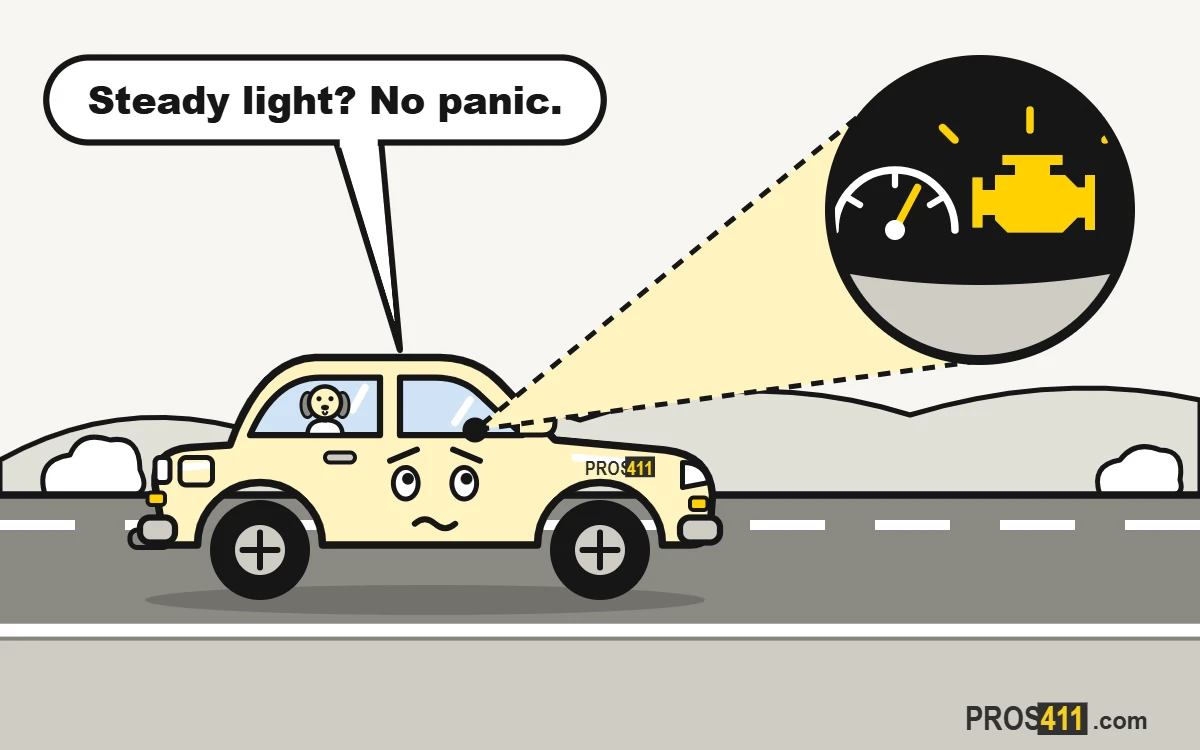
A steady check engine light means the car found a problem that is not an emergency. Keep driving gently and make sure the gas cap is tight: turn it until it clicks. Have the code read in the next few days: many auto parts stores do it for free, and a mechanic can test the part. If the light starts flashing or the car shakes, pull over.
Safety first
If the light starts flashing, the car shakes or loses power, or the temperature or oil light comes on, pull over safely and turn the engine off. On a highway, pull far from traffic with your hazard lights on.
What to do when the check engine light stays on
1The check engine light comes on and stays on
A steady light, not flashing. The car’s computer saw a problem and saved a code. It is not an emergency.
Read all the steps
- The check engine light comes on and stays on. A steady light, not flashing. The car’s computer saw a problem and saved a code. It is not an emergency.
- Drives normally? It is not urgent. No shaking, smoke or other warning lights? Keep driving gently. If it starts flashing, pull over: the engine is misfiring.
- Next stop: tighten the gas cap until it clicks. A loose or worn cap is a common cause. Park, tighten it until it clicks, then give the light a few days of driving to go off.
- Get the code read. A code reader plugs in under the dash. Many auto parts stores read it for free, and a mechanic finds which part failed.
- Fixed: the light goes off. After the repair, the light turns off by itself or the mechanic clears it. If it comes back, the problem is still there.
- Still not fixed? Call a mechanic Especially if: the light starts flashing, or the car shakes or loses power.
Mechanics near you
Share your location and we will show the nearest ones with their phone number.
Or pick your city:
Common causes of a steady light
- A loose, cracked or missing gas cap.
- An oxygen sensor, the part that reads the exhaust.
- Worn spark plugs or an ignition coil starting to fail.
- A small leak in a vacuum or fuel vapor hose.
- A catalytic converter that no longer works as well as it should.
What not to do
- Do not just clear the code and forget it: the problem stays, and some get worse and cost more.
- Do not ignore it for months. Small problems can damage other parts and raise fuel use.
- Do not keep driving if it starts flashing or the car runs rough.
When to call a mechanic
- The light starts flashing, or the car shakes or loses power.
- It stays on after you tightened the gas cap and drove a few days.
- You smell fuel or rotten eggs, or the car uses more gas than usual.
- The car failed, or is due for, an emissions test.
Frequently asked questions
Can I drive with the check engine light on but not flashing?
Usually yes, gently and for a short time. Have the code read in the next few days. If it starts flashing or the car runs rough, pull over.
Can a loose gas cap turn on the check engine light?
Yes, it is one of the most common causes. Tighten it until it clicks. The light can take a few days of driving to go off.
What is the difference between a solid and a flashing check engine light?
A solid light means a problem to check soon. A flashing light means the engine is misfiring and can damage the catalytic converter, so pull over.
Will the check engine light turn off by itself?
Sometimes, if the problem was temporary, like a loose gas cap. If it stays on or comes back, the problem is still there.
Where can I get my check engine code read?
Many auto parts stores read it for free. A mechanic can read it and also test the part, which tells you what really failed.
Will my car pass inspection with the check engine light on?
In many states, no: a lit check engine light fails the emissions test. Fix the problem first, then drive a few days before the test.