Short answer
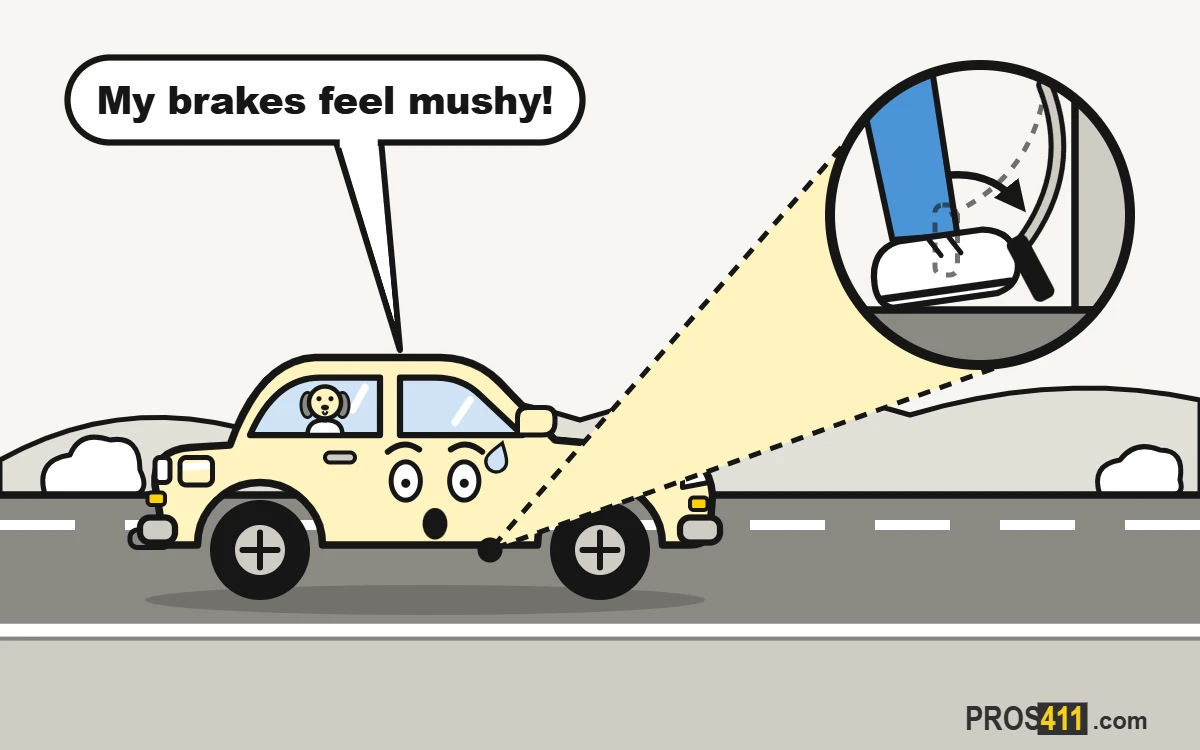
If your brake pedal feels soft, spongy or sinks lower than usual, the brakes may be losing fluid or have air in the lines. Ease off the gas, pump the pedal to build pressure and slow down gently. Turn on the hazard lights and pull over somewhere safe. Do not keep driving, even if adding brake fluid seems to help: call a tow or a mobile mechanic.
Safety first
A soft or sinking brake pedal means the brakes may fail. Slow down gently, use a lower gear and, if you need it, apply the parking brake slowly. Pull over as far from traffic as you can and do not drive the car again until a mechanic checks it.
What to do when the brake pedal feels soft
1The pedal sinks lower than usual
It feels soft or spongy, goes closer to the floor or the car takes longer to stop. A brake warning light may come on.
Read all the steps
- The pedal sinks lower than usual. It feels soft or spongy, goes closer to the floor or the car takes longer to stop. A brake warning light may come on.
- Pump it and slow down gently. Take your foot off the gas and pump the pedal quickly to build pressure. Shift to a lower gear to help slow the car.
- Hazards on and pull over. Signal, turn on the hazard lights and stop well away from traffic. If the car does not slow enough, apply the parking brake slowly.
- Low brake fluid? Still do not drive. With the engine off, the brake fluid tank may sit below MIN. Low fluid means a leak or very worn pads. Adding fluid does not make it safe.
- Call a tow or a mobile mechanic. Have the car towed or fixed where it is. The mechanic looks for leaks, bleeds air out of the lines and checks the master cylinder.
- Call a tow or a mobile mechanic Especially if: the brake pedal feels soft, spongy or sinks (do not drive).
Mechanics near you
Share your location and we will show the nearest ones with their phone number.
Or pick your city:
Common causes
- Air in the brake lines, often after a brake job or when the fluid ran low.
- A brake fluid leak at a line, a hose or a caliper. Look for slick, oily spots near a wheel.
- Old brake fluid that has soaked up water: it can boil when the brakes get hot, and the pedal fades.
- A worn master cylinder: the pedal slowly sinks while you hold it at a stop.
What not to do
- Do not keep driving “carefully” to a shop: a soft pedal can turn into no brakes.
- Do not just top off the fluid and go. The level dropped for a reason.
- Do not spill brake fluid on paint, and wash it off skin: it damages both.
When to call a mechanic
- The brake pedal feels soft, spongy or sinks (do not drive).
- The brake warning light is on.
- You see slick fluid near a wheel or behind the engine.
- The pedal slowly sinks while you hold it at a stop.
Frequently asked questions
Is it safe to drive with a spongy brake pedal?
No. A spongy or sinking pedal means the brakes may fail. Pull over and have the car towed, or call a mobile mechanic who comes to you.
What causes a soft brake pedal?
Usually air in the brake lines or a brake fluid leak. Old fluid with water in it and a worn master cylinder are other common causes.
Why does my brake pedal go to the floor?
The system is losing pressure, most often from a leak or a failing master cylinder. Stop driving and call a tow.
Can I just add brake fluid?
Adding fluid does not fix the cause. A low level means a leak or very worn pads, so the car needs a mechanic before you drive it again.
How do I check my brake fluid?
With the engine off, find the small tank near the back of the engine, usually on the driver’s side. The level should sit between MIN and MAX. Do not open it if it is very low: call a mechanic.
Can a mobile mechanic fix soft brakes at home?
Often yes. Bleeding the brakes and replacing a hose or a caliper are common driveway jobs, and you avoid driving a car that may not stop.