Short answer
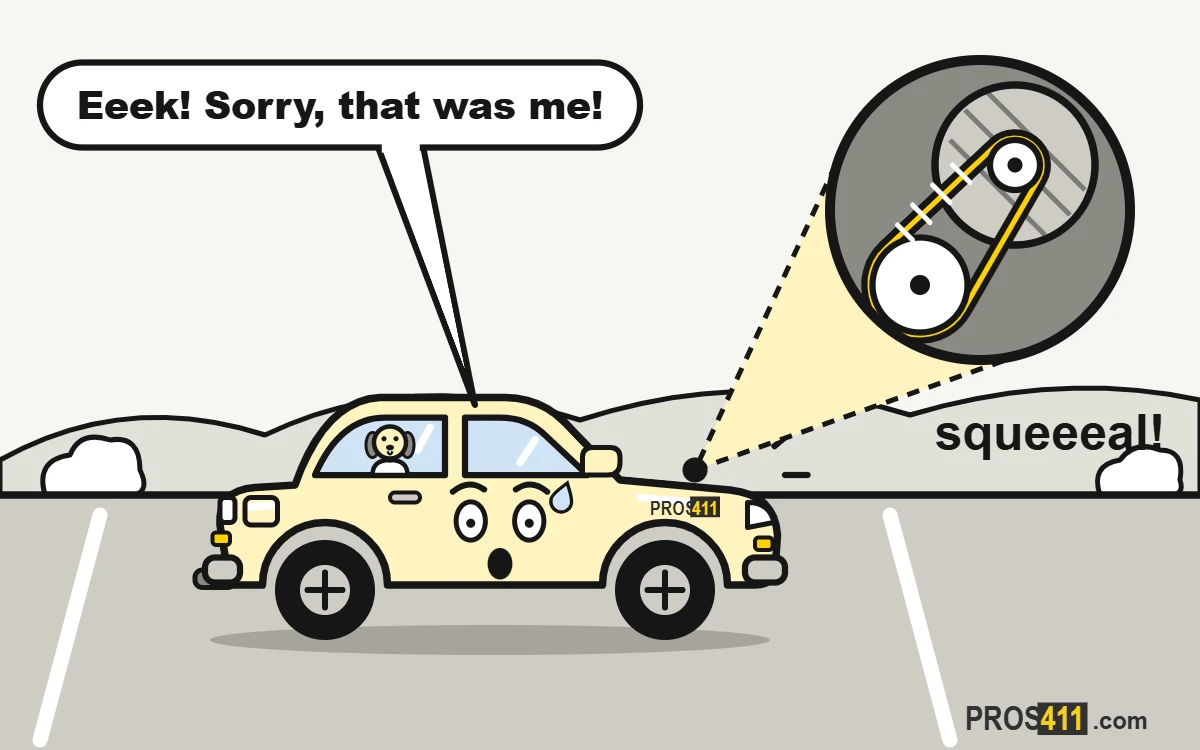
A squeal when you start the car or turn the steering wheel is usually the engine belt slipping on its pulleys. The belt may be worn, glazed or loose, or the tensioner that keeps it tight is weak. In cars with hydraulic power steering, low fluid can also squeal when you turn. With the engine off, look at the belt and check the fluid. Have the belt replaced soon.
Safety first
Look at the belt only with the engine off and the key out, or the key fob away from the car. The radiator fan can start on its own, so keep hands and clothing away from it. Engine parts stay hot for a while after driving.
What to check when your car squeals
1It squeals when you start it or turn
A high squeal for a few seconds on a cold start, when you turn the steering wheel all the way or when you turn on the AC.
Read all the steps
- It squeals when you start it or turn. A high squeal for a few seconds on a cold start, when you turn the steering wheel all the way or when you turn on the AC.
- Engine off: look at the belt. Open the hood with the key out. Find the long rubber belt at the front of the engine. Cracks, shiny glazed sides or frayed edges mean it is worn.
- Check the power steering fluid. If your car has a small tank with a steering wheel on the cap, the level should sit between MIN and MAX. Use only the fluid your manual calls for.
- No belt spray, no soap, no water. Belt dressing sprays and home tricks quiet it for a day and can make the belt slip more. They do not fix a worn belt or a weak tensioner.
- A new belt ends the squeal. A mechanic checks the belt, the tensioner and the pulleys, and replaces what is worn. On most cars it is a quick job.
- Still not fixed? Call a mechanic Especially if: the belt has cracks, shiny sides or frayed edges.
Mechanics near you
Share your location and we will show the nearest ones with their phone number.
Or pick your city:
When it squeals tells you a lot
- On cold or damp mornings, for a few seconds: a worn or slightly loose belt.
- When you turn the steering wheel all the way: low power steering fluid or a slipping belt.
- When you turn on the AC: the belt slips under the extra load of the AC compressor.
- A steady chirp that gets louder: often a worn tensioner or pulley bearing.
- Only when you brake: that is usually the brakes, a small metal tab that warns the pads are thin.
Why not wait
One belt usually runs the alternator, the AC, the power steering pump and, in many engines, the water pump. If it breaks, the battery stops charging, the steering gets heavy and the engine can overheat. The squeal is the early warning, so have it checked within days.
When to call a mechanic
- The belt has cracks, shiny sides or frayed edges.
- The squeal comes back after a few days or gets louder.
- The battery light or the temperature gauge acts up along with the squeal.
- The steering feels heavy, or the power steering fluid keeps getting low.
Frequently asked questions
Why does my car squeal when I start it?
Usually the engine belt slips for a moment on a cold start because it is worn, glazed or loose. Damp mornings make it worse. Have the belt and the tensioner checked.
Why does my car squeal when I turn the steering wheel?
In cars with hydraulic power steering, low fluid or a slipping belt makes the pump squeal when you turn. Check the fluid with the engine off, and have it checked if the noise keeps coming back.
Can I drive with a squealing belt?
For a short time, yes, but get it checked soon. If the belt breaks, you can lose battery charging and power steering, and some engines overheat.
Should I use belt dressing to stop the squeal?
No. It quiets the noise for a short time but can make the belt slip more and pick up dirt. Replacing a worn belt or tensioner fixes the cause.
How do I know if my belt needs replacing?
Look for cracks across the ribs, shiny glazed sides, frayed edges or missing chunks. A mechanic can also measure the wear with a simple gauge.