Short answer
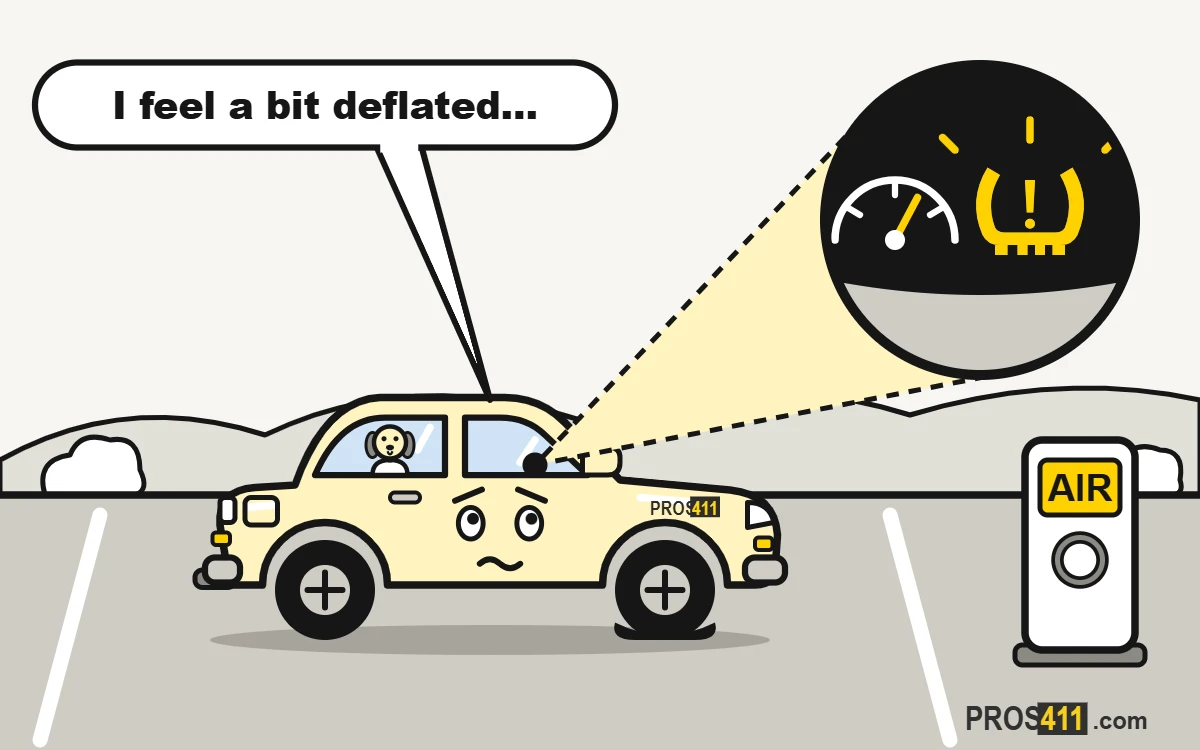
When the tire pressure light comes on, at least one tire is low. Check all four tires at the next safe stop. Find the right pressure on the sticker inside the driver’s door, not on the tire. Fill each tire to that number at a gas station air pump, checking with a gauge. The light should go off after a few miles. If a tire keeps losing air, have it checked.
Safety first
If a tire looks flat, you hear flapping or the car pulls hard to one side, slow down and pull well off the road with your hazard lights on. Do not keep driving on a very low tire.
What to do when the tire pressure light comes on
1The tire pressure light comes on
It looks like a horseshoe with an exclamation point. At least one tire is low on air. Cold mornings often bring it on.
Read all the steps
- The tire pressure light comes on. It looks like a horseshoe with an exclamation point. At least one tire is low on air. Cold mornings often bring it on.
- Look at all four tires. At the next safe stop, walk around the car. A tire that looks flat or has a nail in it needs the spare or a tire shop.
- Find the right number on the door sticker. It is on the driver’s door frame, in PSI. Do not use the number on the tire: that is the maximum, not the right pressure.
- Add air until the gauge reads that number. Use a gas station air pump or a portable pump. Check with a gauge and fill every tire to the sticker number.
- The light goes off after a few miles. Drive a few miles so the sensors update. If it comes back in a day or two, one tire has a slow leak.
- Still not fixed? Call a mechanic Especially if: a tire keeps losing air after you fill it.
Mechanics near you
Share your location and we will show the nearest ones with their phone number.
Or pick your city:
Steady, flashing or back the next day
- Steady light: one or more tires are low. Check and fill them.
- Flashes when you start the car, then stays on: the system has a problem, often a sensor with a dead battery. Check the tires anyway.
- Back after you filled the tires: a slow leak from a nail, the valve or the wheel rim.
- On in the morning and off later: cold air lowers tire pressure. Fill to the sticker number.
What not to do
- Do not fill to the number on the tire sidewall: that is the maximum, not the recommended pressure.
- Do not check right after a long drive. Warm tires read higher, so check them cold if you can.
- Do not ignore a light that keeps coming back. A slow leak can turn into a flat.
When to call a mechanic
- A tire keeps losing air after you fill it.
- You see a nail, a cut or a bulge in a tire.
- The light flashes when you start the car, then stays on (a sensor problem).
- The light stays on even with all four tires at the right pressure.
Frequently asked questions
Can I drive with the tire pressure light on?
Gently, to the nearest air pump or safe stop. Look at all four tires first: if one looks flat or the car pulls, do not drive on it.
What PSI should my tires be?
The number on the sticker inside the driver’s door frame, or in your owner’s manual. Many cars are in the 30s, but go by your sticker.
Why is my tire pressure light on but my tires look fine?
A tire can be several PSI low and still look normal, so check with a gauge. Cold weather also lowers the pressure, which often turns the light on in the morning.
Why is my tire pressure light flashing?
A light that flashes when you start the car and then stays on usually means a problem with the system, often a sensor battery. Check the tires anyway, then have the sensors tested.
How do I reset the tire pressure light?
In most cars it goes off by itself after you fill the tires and drive a few miles. Some cars have a reset button or menu; your owner’s manual shows how.
Who fixes a tire pressure sensor?
Tire shops and many mechanics can test the sensors, replace a dead one and patch a slow leak.