Short answer
Never cap or plug a dripping relief valve: it is the safety valve that keeps the tank from bursting. If it lets out a steady stream or steam, turn the heater off (gas knob to OFF or the breaker) and call a plumber now. A small drip often means the water pressure is too high or the valve is worn. A plumber can test the pressure, add an expansion tank or replace the valve.
Safety first
Water and steam from the relief valve can scald: keep hands and faces away from the end of the pipe. Never cap, plug or shorten the discharge pipe, and do not lift the valve lever on a hot tank. Smell gas? Get out and call 911 or the gas company from outside.
What to do when the water heater relief valve drips
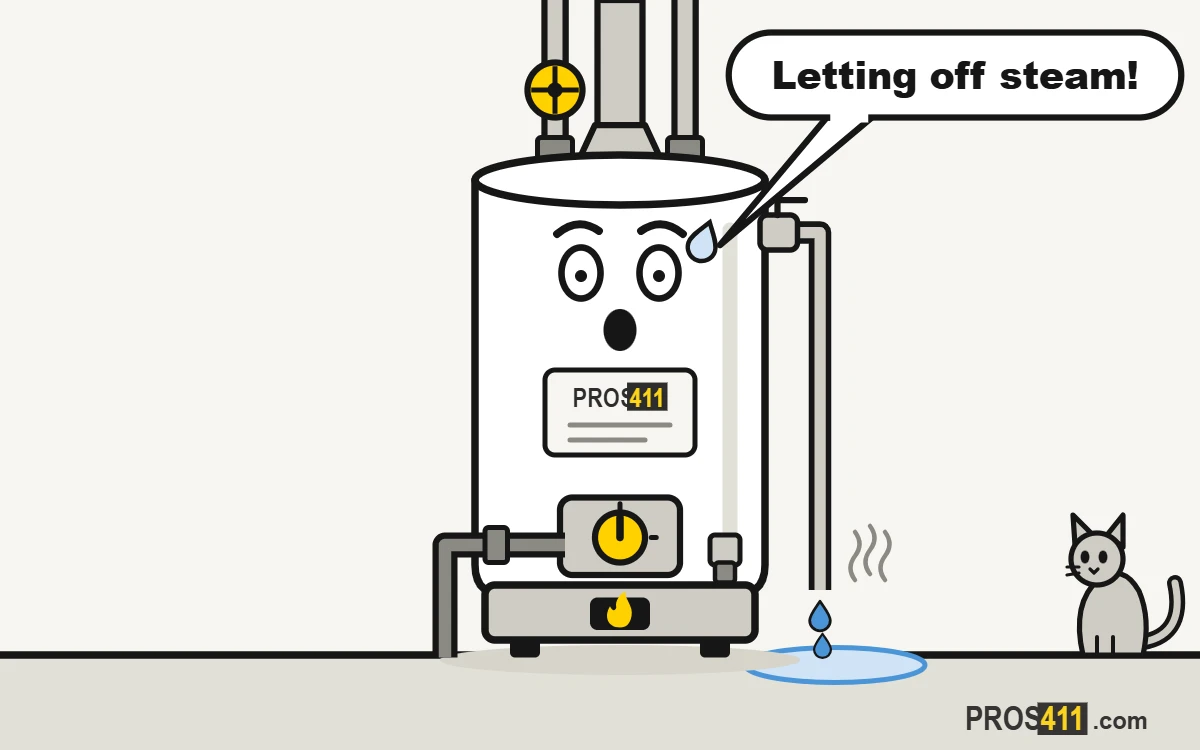
1Water dripping from the side pipe
The pipe that runs down the side of the tank comes from the relief valve. It opens when the tank gets too hot or the pressure gets too high.
Read all the steps
- Water dripping from the side pipe. The pipe that runs down the side of the tank comes from the relief valve. It opens when the tank gets too hot or the pressure gets too high.
- Never cap or plug it. That valve keeps the tank from bursting. Put a bucket under the pipe instead and keep kids and pets away from it.
- Steam or a steady stream? Off and call now. Turn the gas knob to OFF, or switch off the breaker on an electric heater. Then call a plumber right away. Do not wait for it to stop.
- Too much pressure is a common cause. A plumber can screw a gauge onto the drain valve or an outdoor faucet. Above about 80 psi, the pressure in the house is too high.
- An expansion tank or a new valve fixes it. Heated water expands. A small expansion tank on the cold pipe gives it room. If the valve itself is worn, the plumber replaces it.
- Still dripping? Call a plumber Especially if: water or steam keeps coming out of the relief valve pipe.
Plumbers near you
Share your location and we will show the nearest ones with their phone number.
Or pick your city:
Why it drips
- High water pressure coming from the street.
- Thermal expansion: heated water has nowhere to go when the house has a pressure regulator or a check valve and no expansion tank.
- The water is too hot. Check that the dial on the gas control is not on its hottest setting.
- A worn valve that no longer seals, often after years of use.
What not to do
- Do not cap, plug or tie off the discharge pipe. That turns off the safety valve.
- Do not lift the test lever on a hot tank. It can spray scalding water and may not seal again.
- Do not swap in a valve with a different rating. A plumber matches it to the heater.
When to call a plumber
- Water or steam keeps coming out of the relief valve pipe.
- The tank or the pipes on top are very hot, or you hear hissing or banging.
- The drip came back after a new valve was installed.
- Your water pressure tests above 80 psi.
- Any gas smell (call 911 or the gas company first, from outside).
Frequently asked questions
Is it normal for a water heater relief valve to drip?
No. A drip means the tank is too hot, the pressure is too high or the valve is worn. A small drip is not an emergency, but call a plumber soon.
Is a leaking relief valve dangerous?
A steady stream or steam is: turn off the heater and call a plumber now. The bigger danger is capping the valve, because then nothing protects the tank from bursting.
Can I replace a water heater relief valve myself?
It is a job for a plumber. The tank has to be cooled and partly drained, and the new valve has to match the rating of the heater.
What causes too much pressure in a water heater?
Usually high street pressure or thermal expansion: heated water grows and has nowhere to go. An expansion tank or a pressure reducing valve fixes it.
Should water ever come out of the relief valve pipe?
Only when the valve releases dangerous heat or pressure, or during a test by a pro. Water coming out on its own means something needs to be checked.