Short answer
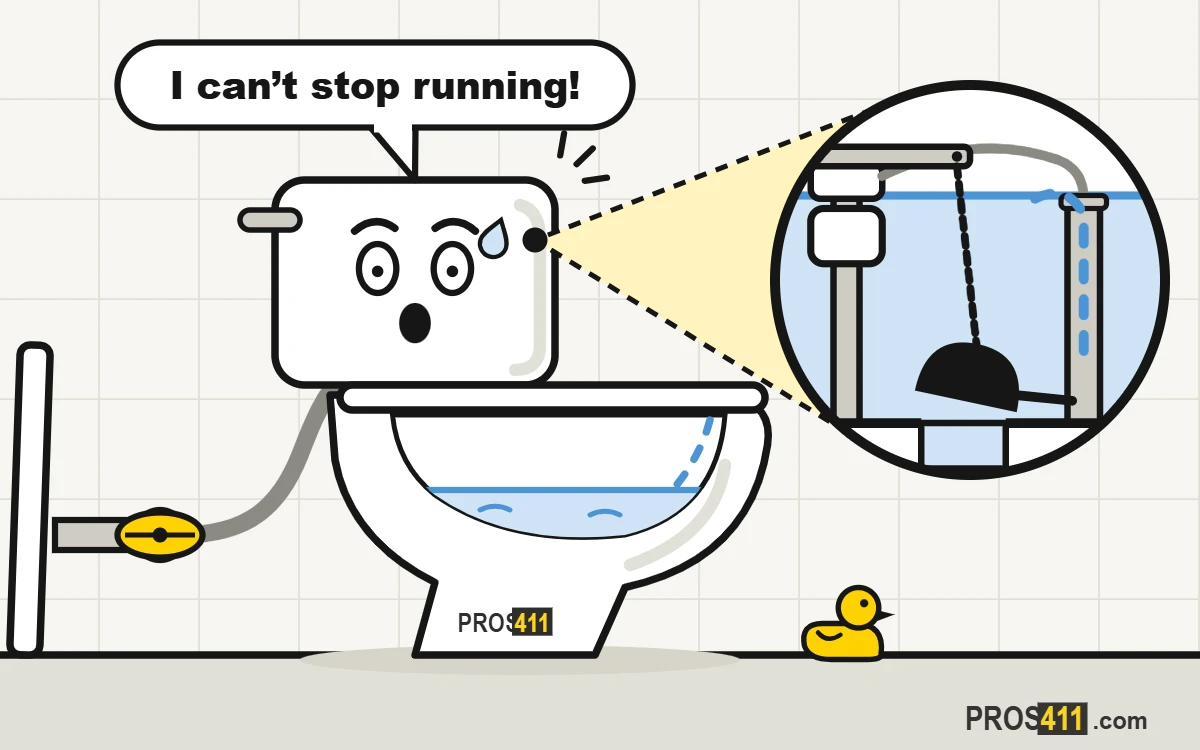
Lift the tank lid and look. If water is spilling into the overflow tube, lower the float until the water stops about 1 inch below the top of the tube. If not, check the chain: it needs a little slack. Still running? Shut off the valve behind the toilet, flush, and replace the flapper with one that matches. A fill valve that hisses nonstop needs replacing.
How to stop a running toilet
1The tank keeps hissing and running
Water trickles into the bowl all day, and you pay for every drop. The fix is almost always inside the tank.
Read all the steps
- The tank keeps hissing and running. Water trickles into the bowl all day, and you pay for every drop. The fix is almost always inside the tank.
- Lift the lid: is water going into the overflow tube?. The overflow tube is the open pipe in the middle of the tank. If water spills into it, the water level is set too high.
- Lower the float. Turn the adjustment screw on the fill valve or slide the float clip down. The water should stop about 1 inch below the top of the tube.
- Give the chain a little slack. A chain that is too tight holds the flapper open. Leave about half an inch of slack so the flapper can seal.
- Still running? Swap the flapper. Turn the shut-off valve clockwise and flush to empty the tank. Unhook the old flapper and clip on a new one that matches.
- Water back on, and quiet. Open the valve slowly and let the tank fill. Flush once and listen: no hiss, no trickle.
- Still not fixed? Call a plumber Especially if: it still runs after a new flapper and the right water level.
Plumbers near you
Share your location and we will show the nearest ones with their phone number.
Or pick your city:
Why it happens
- A worn flapper: after a few years the rubber gets stiff or warped and stops sealing.
- The water level is set too high, so the extra water runs down the overflow tube nonstop.
- The chain is too short, tangled or caught under the flapper.
- A worn fill valve hisses and never shuts off fully, even with the water level right.
Find a silent leak with food coloring
Put a few drops of food coloring in the tank and do not flush. If color shows up in the bowl after 10 minutes, the flapper is leaking. The EPA warns that a worn flapper can silently leak thousands of gallons a year.
What not to do
- Do not force the float arm or the fill valve: the plastic parts crack.
- Do not use in-tank cleaning tablets with bleach. They wear out the rubber flapper.
- Do not guess the flapper size. Bring the old one to the store: 2-inch and 3-inch flappers do not swap.
When to call a plumber
- It still runs after a new flapper and the right water level.
- The shut-off valve is stuck or leaks when you turn it.
- Water drips from the supply line or the tank bolts.
- The tank or the ring the flapper sits on is cracked.
Frequently asked questions
Why does my toilet keep running?
Usually a worn flapper that does not seal. It can also be a water level set too high, so water flows into the overflow tube, or a chain that holds the flapper open. You can fix all three inside the tank.
How much water does a running toilet waste?
A lot. The EPA says a worn flapper can silently leak thousands of gallons a year, and it all shows up on your water bill.
Can I fix a running toilet myself?
Yes, most of the time. Adjusting the float or the chain takes minutes, and a new flapper clips on by hand.
How do I know which flapper to buy?
Take the old one to the hardware store. Most are 2-inch or 3-inch, depending on the size of the hole at the bottom of the tank.
Is a running toilet an emergency?
No, as long as the water stays in the bowl. If the noise or the waste bothers you, close the shut-off valve behind the toilet until you fix it.
Sources
Checked October 24, 2026. Requirements and recommendations change: confirm them on the source site.