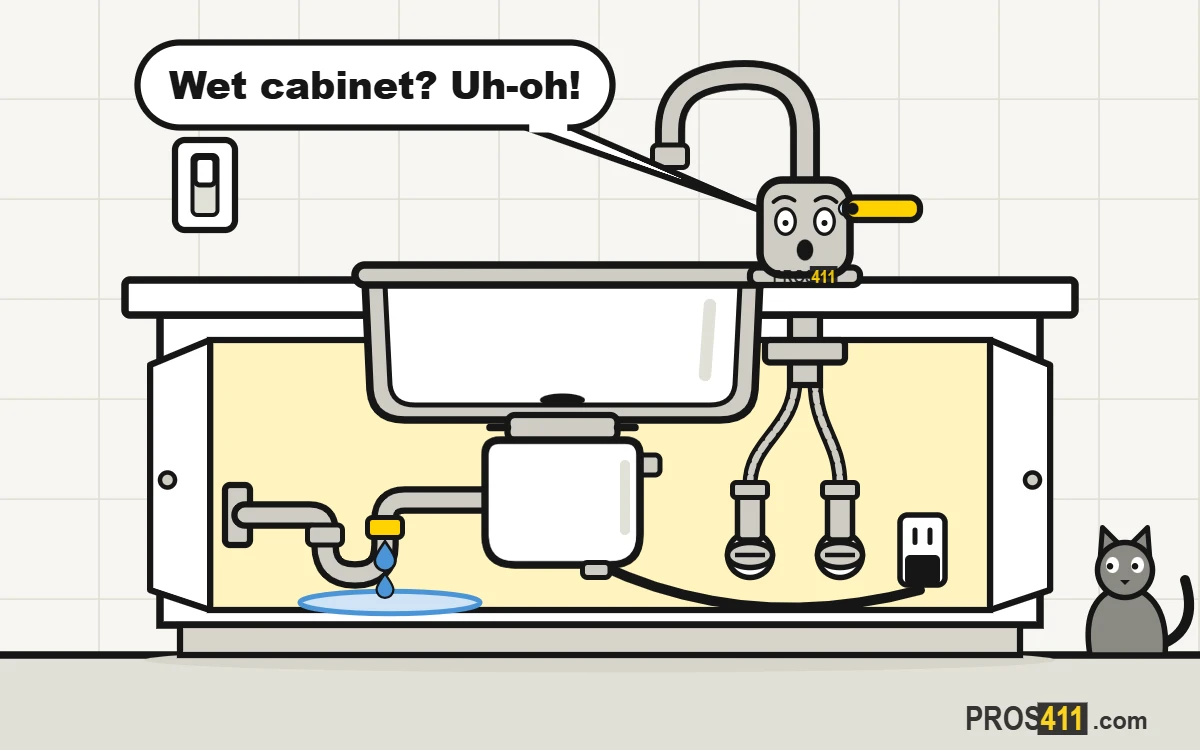
Short answer
Empty the cabinet, dry every pipe and lay paper towels on the cabinet floor. With the faucet off, wipe the valves and supply lines: they are always under pressure. Then fill the sink and let it drain while you watch the drain pipes. Most leaks are a loose slip nut on the drain: hand-tighten it a quarter turn. If a valve, hose or pipe is cracked, close the water and call a plumber.
How to find and stop a leak under the sink
1Water on the cabinet floor
Something under the sink is dripping. Put a bowl under it for now and hold off on the dishwasher until you find it.
Read all the steps
- Water on the cabinet floor. Something under the sink is dripping. Put a bowl under it for now and hold off on the dishwasher until you find it.
- Dry everything and lay down paper towels. Take everything out, dry the pipes with a rag and lay paper towels on the cabinet floor. A new wet spot shows exactly where it drips.
- Check the shut-off valves and supply lines. They hold pressure even with the faucet off. Wipe each valve, nut and hose with a dry tissue. All dry means the leak is on the drain side.
- Fill the sink, then let it drain. Drain leaks only show when water runs. Fill the sink a few inches, pull the plug and watch the pipes and the paper towel.
- Hand-tighten the leaking nut a quarter turn. Plastic slip nuts crack with a wrench. Snug it by hand, dry it and test again. A dry towel means you are done.
- Still not fixed? Call a plumber Especially if: a shut-off valve, a supply hose or a metal pipe is cracked or corroded.
Plumbers near you
Share your location and we will show the nearest ones with their phone number.
Or pick your city:
Where leaks hide
- Around the faucet base or the sink rim: splashes seep under and drip down. Wipe it dry and reseal with caulk.
- The drain flange, where the drain meets the sink: the putty under it dries out and has to be redone.
- The dishwasher hose or the garbage disposal: if the drip comes from the disposal, see the disposal guide.
- A braided supply line that is rusty, kinked or bulging: replace it before it bursts.
What not to do
- Do not wrap the leak in tape and forget it. The drip slows, but the cabinet floor keeps rotting.
- Do not crank plastic nuts with pliers. They crack and leak worse.
- Do not close a wet cabinet. Dry it with the doors open and a fan so mold does not start.
When to call a plumber
- A shut-off valve, a supply hose or a metal pipe is cracked or corroded.
- It still leaks after you tighten the nut, or the trap is cracked.
- The leak comes from the drain flange under the sink basket.
- Water comes from inside the wall, or the cabinet floor is soft or moldy.
Frequently asked questions
Why is there water under my kitchen sink?
Most often a loose slip nut on the drain, a leaking supply line or water seeping in around the faucet. Paper towels on the cabinet floor show you which one it is.
How do I find where my sink is leaking from?
Dry everything, then test one part at a time. Check the supply lines with the faucet off, the drain while a full sink empties and the faucet base by splashing water on it.
Can I use plumber tape on a leaking drain pipe?
No, thread tape does not seal slip nuts. They seal with a beveled washer inside the nut: if snugging the nut does not stop the drip, replace that washer.
Is a slow leak under the sink an emergency?
Not usually, but fix it within days. A constant drip ruins the cabinet floor and grows mold. If a supply line sprays, close its shut-off valve right away.
How tight should a drain slip nut be?
Hand-tight plus about a quarter turn. Plastic nuts crack if you force them with a wrench, and that makes a bigger leak.