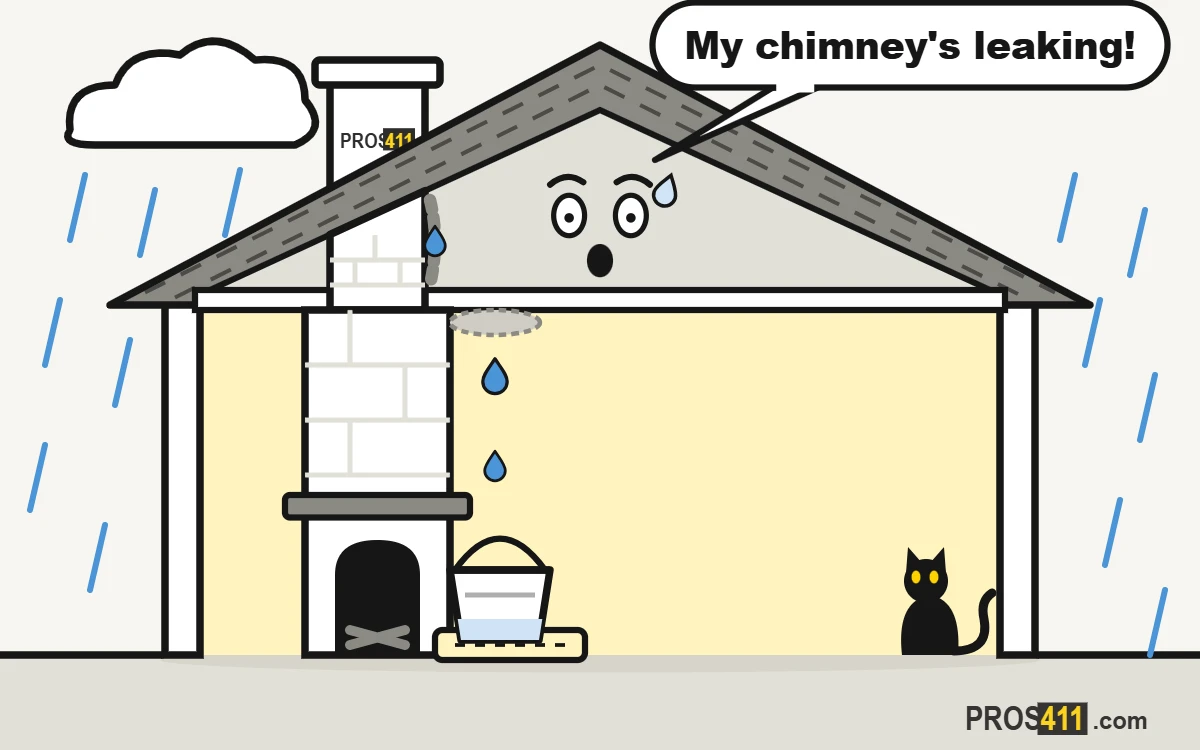
Short answer
If your chimney leaks when it rains, catch the water and check where it shows up. Water inside the fireplace often means a missing cap or a cracked crown on top. Water on the ceiling or the wall next to the chimney usually means the flashing, the metal where the chimney meets the roof. Look from the ground and the attic, then call a roofer or a chimney pro.
Safety first
Stay off the roof. Do not use the fireplace while the firebox or the flue is wet, or if you see crumbling bricks, until a chimney pro checks it.
What to do when the chimney leaks
1Rain gets in around the chimney
Water shows up on the ceiling next to the chimney, on the wall beside it or inside the fireplace.
Read all the steps
- Rain gets in around the chimney. Water shows up on the ceiling next to the chimney, on the wall beside it or inside the fireplace.
- Catch the water and protect the floor. Towels and a bucket where it drips. Water in the firebox? Put a tray inside and close the damper.
- Look at the top from the ground. With binoculars, check for a missing cap, a cracked crown (the concrete top) and bent or loose metal where it meets the roof.
- Check the attic around the chimney. With a flashlight, look for wet wood or stains on the uphill side of the chimney. Step only on the joists.
- A pro seals it, you stay off the roof. A roofer fixes the flashing; a chimney pro repairs the cap, the crown or the bricks. Many do both.
- Still leaking? Call a roofer Especially if: it leaks every time it rains.
Roofers near you
Share your location and we will show the nearest ones with their phone number.
Or pick your city:
Where the water gets in
- Flashing: the metal strips where the chimney meets the roof. If they lift or the sealant cracks, water runs into the attic.
- Cap: the cover on top. Without it, rain falls straight down the flue into the fireplace.
- Crown: the concrete slab on top of the bricks. Cracks let water into the chimney.
- Bricks and mortar: old bricks soak up water, and worn mortar joints let it through.
- Wide chimneys need a cricket, a small peak behind the chimney that sends water around it. Without one, water piles up behind it.
Roofer or chimney pro?
If the water shows up on the ceiling or the wall beside the chimney, start with a roofer: that is usually the flashing. If it is inside the fireplace, or the bricks look wet or crumbly, call a chimney pro. Ask for photos of what they find on top.
When to call a roofer
- It leaks every time it rains.
- Water is getting into the fireplace or the firebox.
- From the ground you see a missing cap, a cracked crown or loose bricks.
- White powder or flaking bricks on the chimney, inside or out.
- The wall or ceiling next to the chimney is stained or soft.
Frequently asked questions
Why is my chimney leaking when it rains?
Most often the flashing where the chimney meets the roof has lifted or cracked. A missing cap, a cracked crown, or worn bricks and mortar are the other common causes.
Is a leaking chimney a roofer or a chimney sweep problem?
Flashing is usually a roofer job. The cap, the crown and the bricks are chimney work. If you cannot tell, call a roofer first if the water is on the ceiling, a chimney pro if it is in the fireplace.
Can I use my fireplace if the chimney leaks?
Better not until it is checked. Water can crack the flue liner and the bricks, and a damaged flue can let heat or smoke reach the wood around it.
Why is there water in my fireplace when it rains?
Usually the chimney has no cap or the crown on top is cracked, so rain falls straight down the flue. A cap with a screen also keeps animals out.
Does homeowners insurance cover a leaking chimney?
Sudden damage from a storm often is covered. Leaks from worn flashing, old mortar or missing maintenance usually are not. Ask your insurer.