Short answer
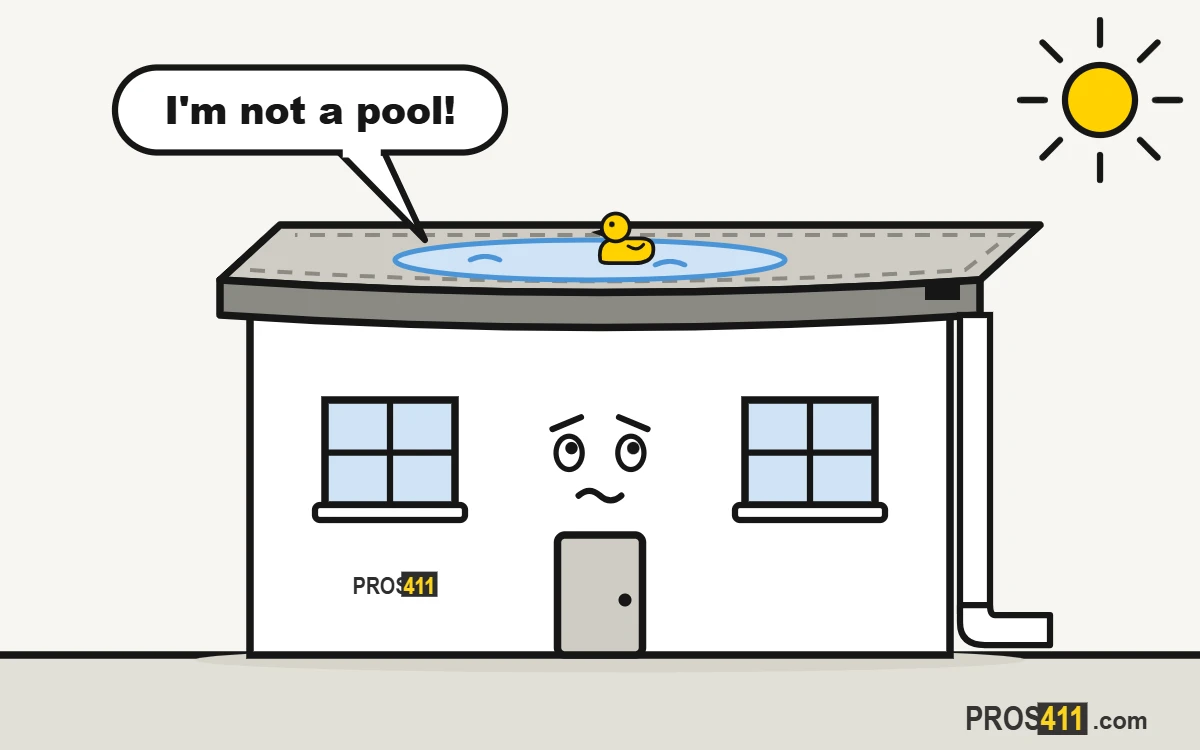
Small puddles on a flat roof that dry within a day or two are common. Water that is still there about 48 hours after the rain is called ponding, and it needs a roofer. From the ground, check that the downspouts and scuppers flow. Look at the ceilings under the puddle for stains. Do not climb up to sweep it off. A roofer can clear the drains and fix the low spot or the slope.
Safety first
Stay off the roof, even if it is flat: a wet roof is slippery, the edges are a fall risk, and a soggy spot may not hold your weight.
What to do about water pooling on a flat roof
1Water sits on the roof days after rain
A low spot or a blocked drain holds a puddle. Still there after about 48 hours? Roofers call that ponding.
Read all the steps
- Water sits on the roof days after rain. A low spot or a blocked drain holds a puddle. Still there after about 48 hours? Roofers call that ponding.
- Check the drains from the ground. After rain, the downspouts and scuppers (the openings at the roof edge) should pour water. Clear the bottom of a clogged downspout.
- Look at the ceiling under the puddle. Stains, bubbles in the paint or a sag under the puddle mean water is getting through or the deck is giving way.
- Do not climb up to sweep it off. A wet flat roof is slippery, the edge is a fall risk, and a soggy spot may not hold you.
- A roofer clears the drain and fixes the slope. They clear clogged drains, and add drains or tapered insulation so the water runs off. The roof dries out.
- Still pooling? Call a roofer Especially if: water is still there about 48 hours after the rain.
Roofers near you
Share your location and we will show the nearest ones with their phone number.
Or pick your city:
Why water pools on a flat roof
Why ponding matters
Standing water wears out the roof surface faster, finds every small crack and adds a lot of weight. Many flat roof warranties do not cover damage from ponding. Fixing the drainage early usually costs far less than replacing a soaked roof later.
When to call a roofer
- Water is still there about 48 hours after the rain.
- There are stains, bubbles or a sag on the ceiling below.
- Plants or algae are growing where the water sits.
- A drain or scupper you cannot reach from the ground is clogged.
Frequently asked questions
Is it normal for water to pool on a flat roof?
Small puddles that dry within a day or two are common. Water that stays about 48 hours or longer is ponding, and it shortens the life of the roof.
How much ponding water on a flat roof is too much?
Any puddle that lasts about two days, gets bigger over time or sits over a stained ceiling is too much. Large ponds also add a lot of weight to the deck.
Can ponding water cause a flat roof to leak?
Yes. Standing water finds small cracks and seams and wears out the surface, so many flat roof leaks start at the low spots.
How do roofers fix ponding water?
They clear or add drains and scuppers, build up the low spots, or add tapered insulation so the roof slopes to the drains.
Should I sweep or pump water off my flat roof?
Not yourself. Climbing up is a fall risk, and sharp tools can tear the roof. If the water has to come off fast, a roofer can do it safely.