Short answer
Push a screwdriver into the board. If it sinks into soft wood, the board is rotten and needs replacing. If the wood is solid and just loose, pull the popped nails and drive two exterior deck screws into each joist, next to the old holes. When you replace a board, check the joists underneath. If they are soft too, keep off that part and call a pro.
Safety first
If the joists, posts, beams or the board that holds the deck to the house are soft, or the deck bounces or sways, keep everyone off and call a pro. A rotten board is a repair; rotten structure can make a deck collapse.
How to fix a loose or rotten deck board
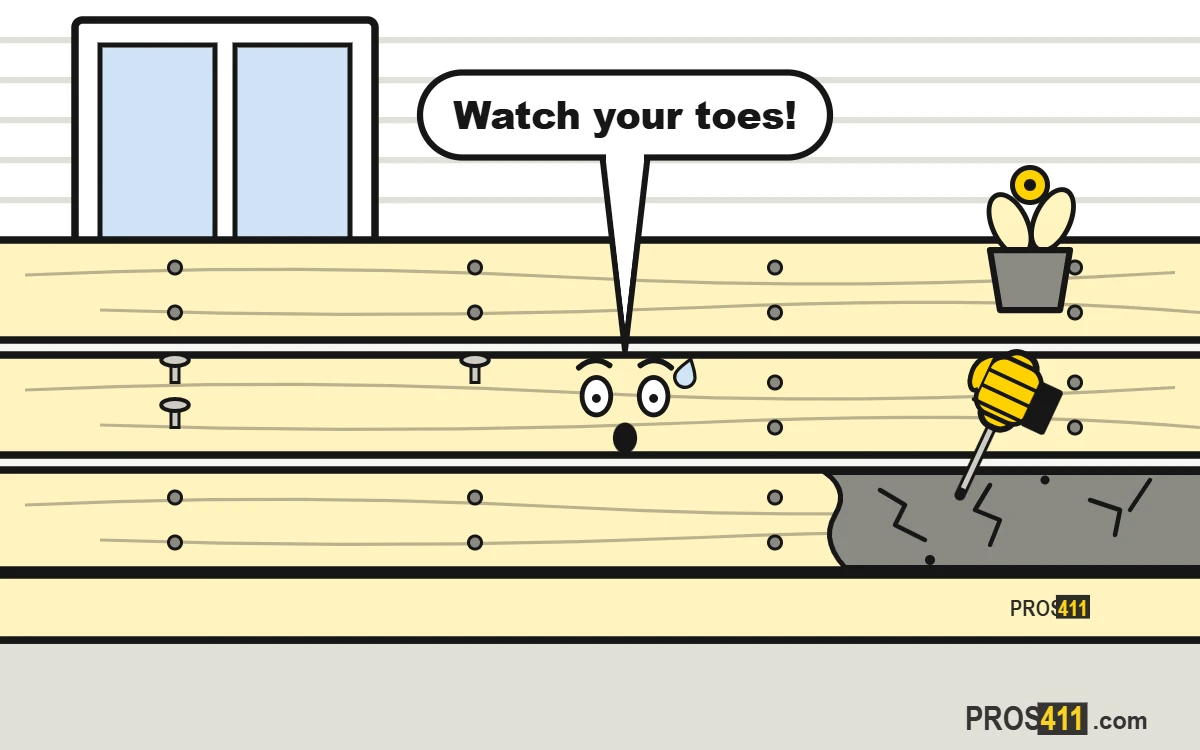
1Popped nails and a soft spot
Nail heads sticking up catch toes, and a soft gray spot can be rot. Find out which boards are just loose and which are rotten.
Read all the steps
- Popped nails and a soft spot. Nail heads sticking up catch toes, and a soft gray spot can be rot. Find out which boards are just loose and which are rotten.
- Screwdriver sinks in? It is rot. Push a screwdriver into the wood. Solid wood pushes back. If it sinks in easily or the wood crumbles, that part of the board is rotten.
- Loose board: swap nails for deck screws. Pull the popped nails with a pry bar. Drive two coated deck screws into each joist, just beside the old holes.
- Rotten board: pull it, check the joists. Pry the board up and poke the joists underneath. If a joist is soft too, stop using that part of the deck and call a pro.
- New board, two screws per joist. Cut a new board to length, leave a small gap on each side for drainage, and screw it down with two screws at every joist.
- Still not fixed? Call a handyman Especially if: a joist, beam or post is soft, cracked or rotten.
Handyman near you
Share your location and we will show the nearest ones with their phone number.
Or pick your city:
Why deck boards pop and rot
Wood swells when it gets wet and shrinks when it dries. Every season that movement pushes nails up a little, until the board rocks. Rot starts where water sits: under planters, between tight boards and where leaves pile up.
What not to do
- Do not just hammer popped nails back down. They work loose again within a season.
- Do not use indoor or drywall screws. Use deck screws rated for treated lumber, or stainless steel near salt water.
- Do not butt a new board tight against its neighbors. Leave a small gap so water drains.
- Do not ignore a deck that bounces or sways.
Keep the rest of the deck dry
Sweep leaves out of the gaps, move planters now and then so the wood under them dries, and reseal the deck when water stops beading on it. A board that dries fast lasts years longer.
When to call a handyman
- A joist, beam or post is soft, cracked or rotten.
- The deck bounces, sways or pulls away from the house.
- A railing is loose or a stair wobbles.
- Many boards are soft at once.
Frequently asked questions
How do I know if a deck board is rotten?
Push a screwdriver or an awl into it. Sound wood resists; rotten wood feels soft or spongy, or crumbles. Dark, cracked spots that stay damp are a warning sign.
Should I use screws or nails on deck boards?
Screws. Coated or stainless deck screws hold much better and do not pop up as the wood moves. Drive two at each joist.
Can I replace just one deck board?
Yes. Pry it up, cut a new board of the same thickness to length, and screw it down with a small gap on each side. New wood looks different at first but weathers in.
Why do deck nails keep popping up?
The wood swells and shrinks with the weather and slowly pushes smooth nails out. Swap them for deck screws and they stay put.
When is a deck unsafe?
When the structure is damaged, not just a board. Soft joists or posts, rot where the deck meets the house, loose railings or a deck that bounces or sways: keep people off and call a pro.