Short answer
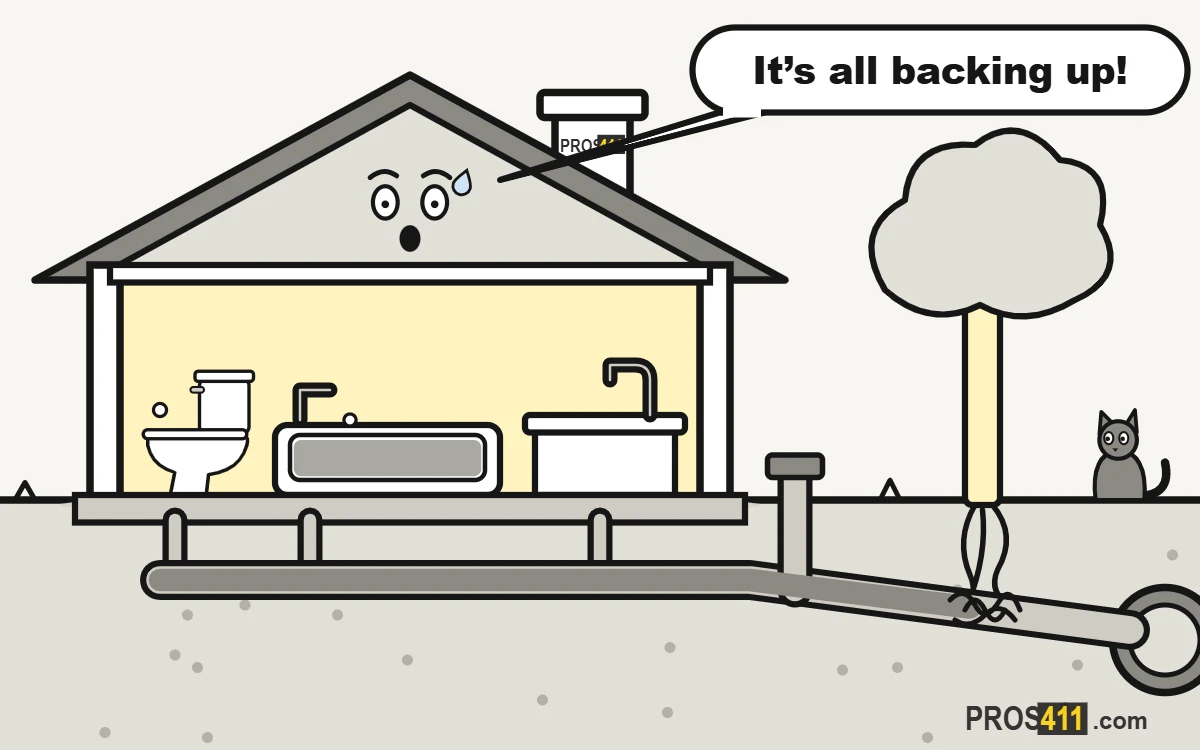
When the toilet, tub and sinks all back up or drain slowly at once, the clog is in the main sewer line, not in one drain. Stop using water, do not pour drain cleaner and call a plumber. They clear it through the sewer cleanout with a cable machine or a water jetter, and a camera shows whether roots or a broken pipe caused it.
Signs of a main sewer line clog, and what happens next
1Everything backs up at once
Flush the toilet and water rises in the tub. Sinks drain slowly and drains gurgle. One clog in the main line blocks every drain upstream.
Read all the steps
- Everything backs up at once. Flush the toilet and water rises in the tub. Sinks drain slowly and drains gurgle. One clog in the main line blocks every drain upstream.
- Stop using water. Every drain flows into the main line, so any water you use has nowhere to go but back up into the house.
- Find the sewer cleanout. A short pipe with a cap, usually in the yard near the house or in the basement. Do not open it yourself: sewage can spray out.
- The plumber snakes the line from there. A sewer machine sends a spinning cable down the cleanout to cut through roots, wipes and grease. A water jetter can scour the pipe clean.
- A camera shows what caused it. A small camera on a cable shows roots, a crack or a sag. Then you know if it was a one-time clog or the pipe needs repair.
- Call a plumber to clear the main line Especially if: two or more drains are slow or back up at the same time.
Plumbers near you
Share your location and we will show the nearest ones with their phone number.
Or pick your city:
Signs it is the main line, not one drain
- Water comes up in the tub or shower when you flush.
- The toilet bubbles or gurgles when a sink drains.
- More than one fixture is slow, especially on the lowest floor.
- Water or a sewage smell around a floor drain or the cleanout.
Why main lines clog
- Tree roots that grow into the joints of old pipes looking for water.
- "Flushable" wipes, paper towels and hygiene products that do not break down.
- Grease poured down the kitchen sink.
- A pipe that sagged, cracked or collapsed under the yard.
What not to do
- Do not pour drain cleaner: it will not reach the clog and makes the water dangerous.
- Do not keep plunging the toilet: it pushes sewage out of another drain.
- Do not rent a sewer machine without experience: the cable can kink or get stuck in the line.
When to call a plumber
- Two or more drains are slow or back up at the same time.
- Water comes up in the tub or a floor drain when you flush.
- Drains gurgle and you smell sewage.
- The main line clogs again within months (likely roots or a damaged pipe).
Frequently asked questions
How do I know if my main sewer line is clogged?
Several drains act up at once: the tub fills when you flush, the toilet gurgles when the sink drains, or the lowest drains back up. A clog in one sink only affects that sink.
Can I unclog a main sewer line myself?
It is not a good DIY job. Clearing it takes a sewer machine with a long cable, and opening a cleanout with sewage backed up behind it can spray you. Call a plumber.
What is a sewer cleanout?
A capped pipe that gives a straight path into the main sewer line, usually in the yard near the house, in a basement or in a crawl space. Plumbers use it to clear and inspect the line.
Will drain cleaner work on a main line clog?
No. It cannot reach a clog that far down and it can damage old pipes. It also makes backed-up water caustic for whoever cleans it.
How do tree roots get into sewer lines?
They grow toward the moisture at small cracks and loose joints, then fill the pipe from inside. Older clay and cast iron lines are the most common victims.
How much does it cost to clear a main sewer line?
It depends on access and on what caused the clog. Our plumber cost guide has current price ranges from several sources, including main line clogs and hydro jetting.